
– Gabriela Mazzante, 2025
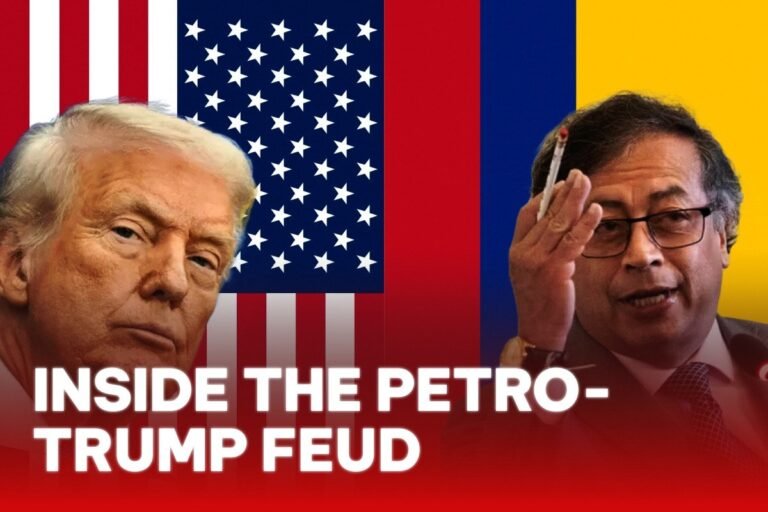
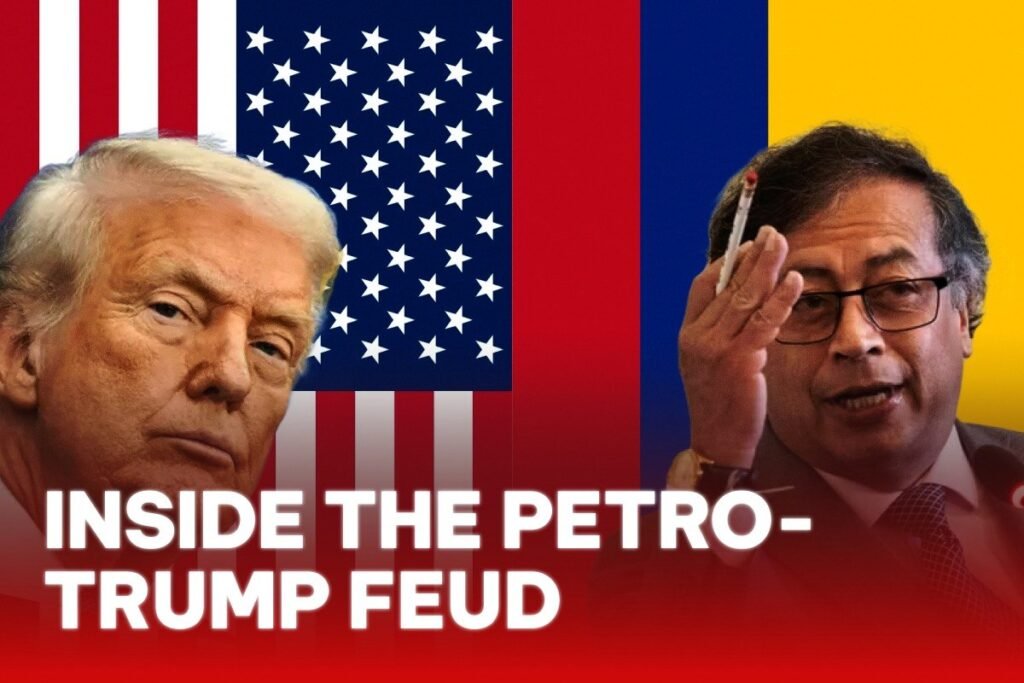
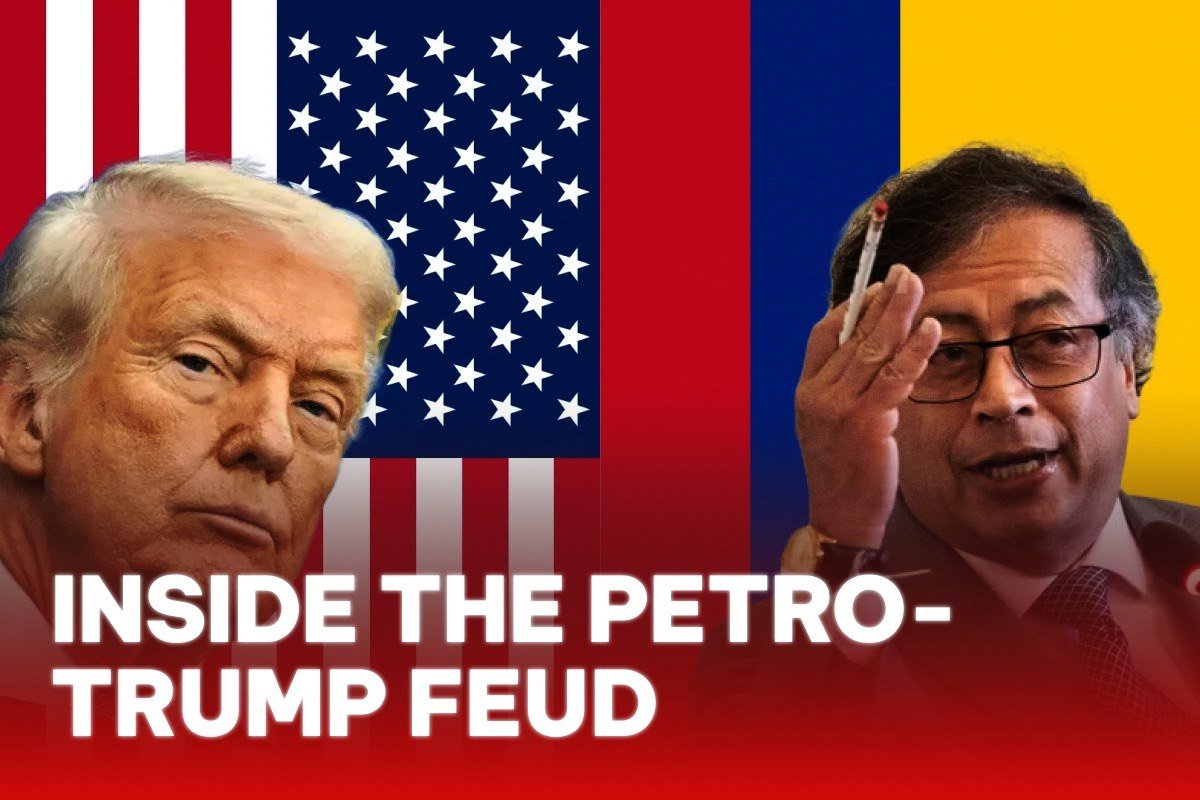
For three decades, cooperation between the United States and Colombia stood as one of Latin America’s most stable alliances. Washington poured billions of dollars into military assistance, intelligence sharing, and anti-drug operations that turned Colombia into a key partner in the “war on drugs.” But in 2025, that relationship fractured. What began as a dispute over narcotrafficking policy has evolved into an open political feud between Colombian president Gustavo Petro and U.S. president Donald Trump, placing at risk both countries’ cooperation and Colombia’s fragile peace process.
Trump has insisted the feud is “with Petro, not with Colombia,” while Petro claims it is a confrontation against the entire Latin American region, ****a new form of pressure that undermines national sovereignty. The exchange has transformed what was once a technical partnership into an ideological battle over who defines peace and independence in the hemisphere.
A Diplomatic Meltdown
Tensions erupted on September 27 when Washington revoked Petro’s U.S. visa, citing “reckless and inflammatory” behavior after his speech at a pro-Palestine rally in New York. From the podium, Petro urged U.S. and Israeli soldiers to “disobey orders” and refuse participation in Gaza’s offensive, comparing their leaders to “tyrants and fascists”. Within days, Trump’s administration suspended high-level contacts, arguing that the Colombian leader had incited insubordination in a time of war. Petro’s interior minister responded that the move punished a president who had merely “spoken the truth” about the suffering in Gaza.
The visa dispute ties to a bigger picture of an escalating tension between both countries: on September 15, the United States decertified Colombia as a cooperative partner in the fight against narcotrafficking for the first time in nearly 30 years. The certification, created under the U.S. Foreign Assistance Act of 1987, determines which nations qualify for anti-drug funding and access to U.S. military equipment. Its withdrawal threatens hundreds of millions of dollars in aid and exposes Colombia to tariffs, credit restrictions, and suspended arms sales.
Although Trump later issued a waiver to preserve limited collaboration, the symbolism was unmistakable: an old ally had been demoted. Bogotá, once held up as the model of U.S. drug-war partnership, now found itself listed alongside “dishonest nations” such as Venezuela and Myanmar.
The Caribbean Incident
The crisis deepened days later when the U.S. military carried out a series of maritime strikes in the Caribbean, claiming to target drug-trafficking vessels. On September 29, four people were killed in one of the attacks near Venezuelan waters. Petro alleged that the boat was Colombian, with civilians on board, and condemned the United States for what he called a “colonial act of aggression” against Latin America.
At the United Nations, he went further, declaring that the real cartel bosses “live in Miami and are neighbors of the U.S. president”. Washington dismissed his remarks as baseless. A statement relayed to Colombian media said the White House still viewed Bogotá as “a strategic ally,” but called Petro’s accusations “unfounded and reprehensible”.
For Petro, the episode confirmed his belief that the United States was acting as a military power of intervention in the hemisphere. For Trump, it reinforced the idea that Colombia’s president had ultimately failed to combat narcotraffic in the region. The Caribbean attacks thus symbolized a deeper struggle: who defines sovereignty in Latin America, and how far Washington will go in the name of the drug war.
Total Peace Meets Total Pressure
At the center of Trump’s criticism lies Petro’s flagship initiative, “Total Peace.” Enacted by law in 2022, it seeks negotiated settlements or judicial demobilization for all armed actors in Colombia, both guerrilla insurgencies like the ELN and FARC dissident blocs such as the Estado Mayor Central (EMC), and criminal networks like the Clan del Golfo. The policy marks a shift away from the militarized strategies that defined Plan Colombia, favoring dialogue, rural development, and voluntary crop substitution.
Trump and his allies, however, frame Total Peace as appeasement. In the official decertification notice, Washington blamed “the political leadership of Colombia” for a rise in coca cultivation and accused Petro of “accommodations with narco-terrorist groups.” The State Department argued that illegal crops had expanded and violence persisted in regions such as Catatumbo, where the government declared a state of emergency after clashes between the ELN and FARC dissidents.
Petro rejects those accusations, pointing to official figures showing a **record 889 tons of cocaine seized in 2024,** nearly four times the 2015 level, and a downward trend in cultivation compared with the previous administration. He argues that his government has confiscated more drugs and dismantled more processing labs than any of his predecessors, while avoiding the large-scale bombings that once devastated rural communities. Foreign Policy has described Colombia as a “leader in the global shift toward public-health-based drug policy,” crediting Petro with replacing repression with prevention.
The Road Ahead
The ideological gulf between Petro and Trump is now reshaping the U.S.–Colombia partnership itself. Petro sees the drug war as a failed experiment that militarized poverty; Trump views it as a fight that must be won through force. The fallout could go beyond rhetoric. It could lead to an escalation in narcotraffic war in case the US persists in bombing ships in the Caribbean Sea. A prolonged standoff could lead to tariffs or suspended cooperation, aggravating an already fragile economy, since the United States remains Colombia’s largest trading partner and primary source of security funding. Between these worldviews stands a country still struggling to consolidate peace after six decades of conflict.
With the feud between the two presidents and the shortening cooperation between Washington and Bogotá, Colombia faces a defining test. As the 2026 elections draw nearer, Petro’s approval ratings waver and violence resurges in the countryside. The question that lingers is whether Colombians will ever see the promise of Total Peace or whether foreign pressure and domestic distrust will once again turn peace into another casualty of politics.