
– M.S.
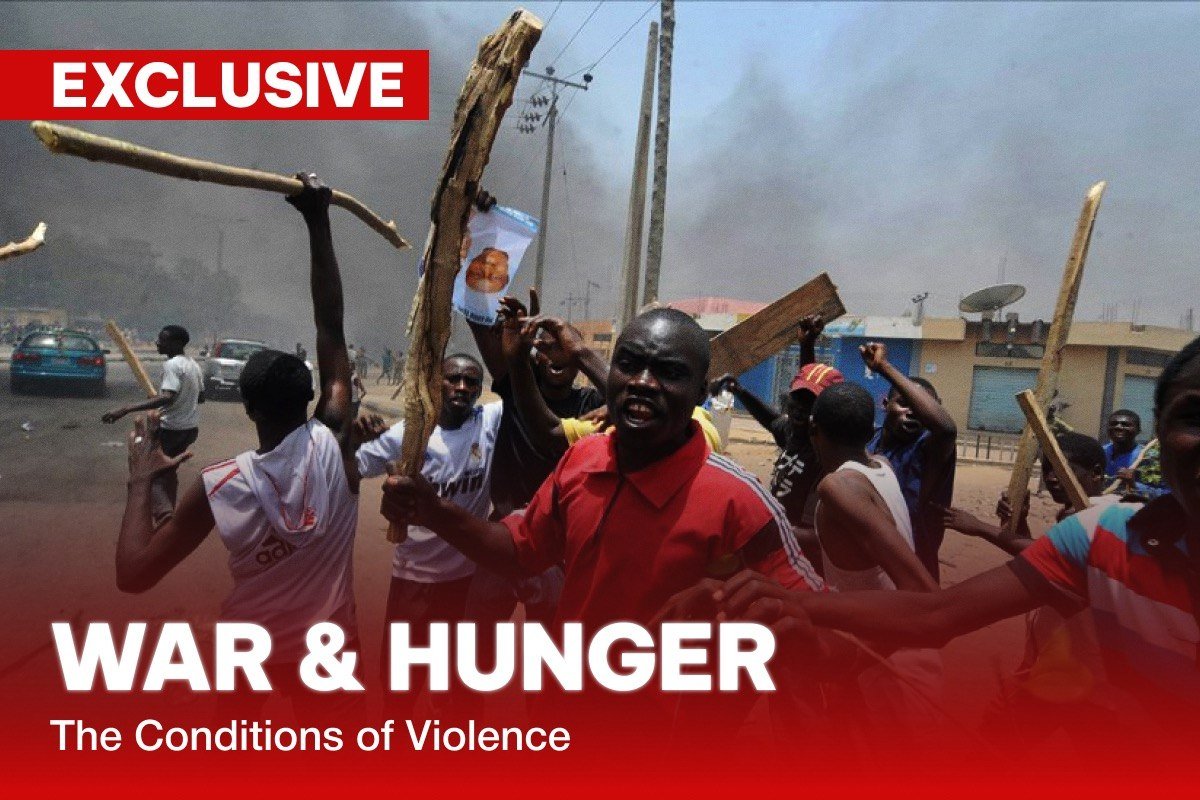
The violence committed by Boko Haram has caused profound and irreversible harm to civilians, and acknowledging this harm is essential. At the same time, understanding how individuals become involved in such violence is necessary if it is to be prevented. Violence does not require monsters; it requires conditions in which ordinary moral limits slowly collapse. Examining how ordinary boys become drawn into armed groups therefore, requires looking beyond individual moral character to the environments that shape decision-making in contexts of chronic violence and deprivation.
Recognising that victimhood and agency can coexist does not minimise the harm caused by Boko Haram’s actions; rather, it clarifies how such violence becomes possible. Understanding this constrained agency does not excuse violent acts, but explains how ordinary moral boundaries can erode when survival, safety, and belonging are systematically undermined.
The pathway into armed groups is best understood as a layering of pressures rather than a single trigger.
Extreme Poverty as Structural Violence
Extreme poverty is more than a lack of income. It is a system of deprivation that quietly strips people of food, safety, education, healthcare and, ultimately, dignity. Advocates at ATD Fourth World describe it as a form of “structural violence” — a condition in which hardship is not accidental but built into social and economic systems.
For children, the consequences are layered and relentless. Those growing up in extreme poverty often face overlapping hardships at once: inadequate housing, food insecurity, unsafe neighborhoods and limited access to school or medical care. These weakened protective environments leave them more exposed to exploitation, including child labour, early marriage, trafficking and recruitment by armed groups. Poverty, in this sense, is not simply an economic status. It becomes the environment in which vulnerability deepens.
Research in developmental psychology underscores how these conditions shape young lives. Studies of children exposed to violence show that repeated exposure can shift what they perceive as normal. Aggression, once shocking, becomes familiar. A study published in Social Psychological and Personality Science found that children who witness violence are more likely to show increases in aggressive behaviour over time — not always immediately, but gradually, as their understanding of acceptable behaviour evolves.
Public health research adds another layer to the picture. Living near violence has been linked to chronic stress, reduced attention spans and weakened impulse control. Academic performance can suffer. Over time, these effects compound, limiting long-term opportunities and undermining the development of human capital. The damage is often invisible, but its impact can stretch across lifetimes.
In environments marked by both poverty and insecurity, choices are narrow. When stable jobs, reliable schools and basic protections are absent, high-risk alternatives can begin to appear rational. Non-state armed groups and criminal networks frequently exploit these gaps, offering income, protection or a sense of belonging where governments have failed to do so.
Poverty alone does not mechanically produce extremism, and structural violence does not automatically lead to militancy. But it can create the conditions in which recruitment becomes conceivable — particularly for children and adolescents whose daily realities are shaped by deprivation, instability and the normalization of violence.
Poverty as a Central Motivator in the Nigerian Context
In northern Nigeria, the pathway from deprivation to extremism does not follow a single line. It unfolds at the intersection of structural inequality, personal vulnerability and organised recruitment strategies, each reinforcing the other.
Nigeria’s north–south divide is not only economic but also socially symbolic. The South, home to commercial hubs such as Lagos and oil-producing states like Rivers State, generates disproportionately higher revenue than many northern states. Meanwhile, multidimensional poverty remains heavily concentrated in the North, where infrastructure gaps, lower educational attainment and demographic pressures deepen hardship. The disparity is widely visible — in roads, schools, electricity supply and employment prospects.
The religious map of the country overlaps with this divide: the North is predominantly Muslim, the South largely Christian. But researchers caution against reading the inequality as a simple religious conflict. Northern Muslim communities are themselves internally diverse, with long histories of theological and political disagreement. Religion, in this context, is less a root cause than a framework that can be mobilised. It becomes a language through which economic grievances are narrated and politicised.
Extremist ideology gains traction when it appears to make sense of lived experience. Research on radicalisation shows that young people are particularly vulnerable when they feel excluded, unheard or unfairly treated. A sense of not belonging, problems at home, low self-esteem, involvement in gangs or petty crime — these personal vulnerabilities can make narratives of grievance more persuasive. Crucially, such feelings do not always align with objective deprivation. Perceived injustice, even if not rooted in direct victimisation, can be powerful.
In northern Nigeria, these psychological dynamics intersect with structural ones. Where schools are underfunded, youth unemployment is high and state services are weak, frustration accumulates. Online propaganda and local networks amplify it. Extremist groups increasingly use digital platforms to target young people, offering simple explanations for complex inequalities and promising dignity, respect and purpose in return for loyalty.
In northeastern Nigeria, recruitment dynamics suggest that material pressures often outweigh doctrinal conviction. Evidence from the Institute for Security Studies Policy Brief 98 finds that financial incentives and access to income are cited more frequently than religious ideology as motivations for joining Boko Haram. More than 65% of survey respondents linked recruitment to economic reasons — the need to earn money or secure basic livelihoods. Social media analysis referenced in the same report indicates that payments may be offered for carrying out attacks or providing intelligence, reinforcing the perception of the group as a source of employment in regions marked by chronic joblessness.
This pattern sets the Nigerian case apart from conflict settings where ideological radicalisation precedes material inducement. In northern Nigeria, ideology often appears layered onto deprivation rather than operating independently of it. Youth unemployment, economic marginalisation and limited avenues for social mobility shape the recruitment environment more decisively than doctrinal persuasion alone.
While religious rhetoric remains central to Boko Haram’s public messaging, the ISS findings suggest many respondents view religion as secondary to economic drivers. In this context, religion functions less as the primary trigger and more as a legitimising frame attached to pre-existing grievances rooted in poverty, inequality and exclusion.
From Structural Poverty to the Politics of Hunger
While poverty operates as a broad structural condition, its effects become most immediate and visceral through hunger. Deprivation may be multidimensional, but food insecurity transforms inequality into a daily calculation of survival. When families cannot reliably access meals, abstract grievances about marginalisation are replaced by urgent decisions about sustenance. In such contexts, the moral and psychological boundaries that ordinarily constrain behaviour are tested not in theory, but in the immediacy of need.
Hunger narrows time horizons. Long-term risks become secondary to short-term survival. For children and adolescents in particular, the absence of stable nutrition intensifies vulnerability, weakening both physical resilience and social protection. As ATD Fourth World argues, extreme poverty heightens exposure to exploitation, and food insecurity often becomes the entry point through which that exploitation unfolds. Armed groups operating in food-insecure environments can therefore transform subsistence into leverage.
In northeastern Nigeria, this dynamic is especially significant. When access to food is disrupted by violence, displacement, or economic collapse, control over agricultural production, distribution, and trade becomes politically consequential. Armed groups that regulate or distribute food do not merely alleviate hunger; they reshape authority structures. Under such conditions, sustenance becomes entangled with loyalty, and survival becomes intertwined with compliance.
It is at this intersection, where structural deprivation becomes embodied through hunger, that food shifts from humanitarian concern to strategic instrument.
How Hunger Fuels Recruitment
In recent years, scholars of modern conflict have increasingly examined how tools beyond conventional weaponry are mobilised to influence the course of war. This shift highlights the strategic use of everyday resources to exert power, shape behaviour, and alter territorial control. Food occupies a central place in this discussion, as it can be manipulated to pressure populations and weaken opposing actors. As Papale and Castelli (2025) argue in their analysis of Boko Haram and Al-Shabaab, food insecurity is not merely a by-product of insurgency but can become embedded within insurgent strategy itself, serving both as an instrument of governance and as a means of contesting state authority.
One way Boko Haram has weaponised food is by using its distribution to build support and weaken state authority among marginalised communities. By controlling who eats, when, and under what conditions, the group can assert influence in contested areas and secure compliance without relying solely on overt military force.
Control, however, is not exercised through distribution alone. In territories under ISWAP influence, food production and access have also been incorporated into structured systems of taxation that resemble parallel governance structures. Levies imposed on livestock owners, farmers, fishers and traders transform agricultural activity into a source of revenue and regulation, binding livelihoods directly to the group’s authority. Payments are formalised through issued receipts, reinforcing the appearance of administrative order and institutional permanence. Those who seek to fish, farm, or trade within these areas must pay for access and continued operation, effectively tying subsistence and commerce to compliance. Through this system, food is not only sustenance or propaganda; it becomes a mechanism through which economic life is monitored, monetised and subordinated to insurgent control.
In such environments, hunger is not an abstract humanitarian statistic. It shapes daily decisions: whether to farm or flee, whether to comply or resist, whether to seek protection from the very group that constrains access to food. When legal economic pathways collapse, and subsistence depends on proximity to insurgent authority, joining may appear less like ideological commitment and more like a pragmatic adaptation to an altered reality.
While the manipulation of food can expand insurgent control, it is not without consequences. Papale and Castelli describe the strategy as a “double-edged weapon”: although restricting and regulating food supplies may initially consolidate authority, it simultaneously generates conditions that erode that authority over time. Attacks on crops, pastures, and transport routes disrupt local economies in ways that ultimately affect insurgents as well as civilians. As supply chains collapse and agricultural production declines, armed groups lose access to the very resources they depend on to reward loyalty and attract new recruits.
Reports indicate that worsening humanitarian conditions in insurgent-controlled territories have contributed to defections, as fighters and supporters struggle to secure basic nourishment. In this sense, hunger can cease to function as leverage and instead become a liability, undermining both operational capacity and local support.
The pressures created by food insecurity are not confined to boys or young men. As Luigi Achilli’s research shows, girls and young women in northeast Nigeria confront similar survival dilemmas. One adolescent girl from near Maiduguri recalled that she joined Boko Haram at fifteen because “we did not have anything else… we were starving.” For her, as for others, the group appeared to offer immediate relief from deprivation after the violent loss of her parents. Yet Achilli’s interviews also reveal the fragility of this arrangement: while some children reported having more food or material goods after joining, their participation was shaped as much by social recognition and protection as by sustenance alone. Hunger may open the door, but belonging and status help sustain involvement.
Over time, however, when insurgent violence further devastates farmland and local markets, the material incentives shrink. As Papale and Castelli argue, the weaponisation of food can ultimately “generate disruptions undermining militants’ appeal and capabilities.” The same tactics that once produced dependence can accelerate disillusionment, increase resistance, and reduce the resources necessary to sustain recruitment.
This example shows that recruitment is not a simple matter of moral failure, but a response to layered social and material pressures, highlighting the importance of understanding the environment in which violence occurs.
Hunger does not exist in isolation. It interacts directly with the region’s education crisis, reinforcing the same vulnerabilities that armed groups exploit.
In much of northeastern Nigeria, food insecurity and school attendance are closely linked. Families facing chronic hunger often depend on children’s labour to survive, whether through street hawking, farm work or informal jobs. When daily survival is uncertain, education becomes secondary. Over time, irregular attendance turns into permanent dropout, expanding the population of out-of-school youth.
The consequences extend beyond literacy. Education is one of the strongest predictors of employability and income stability. Where schooling is limited or interrupted — particularly in conflict-affected states such as Borno and Yobe — youth unemployment rises. The result is not only economic stagnation but social frustration. Young people unable to secure work or contribute to household survival face blocked futures, diminishing status and weakened prospects for social mobility.
Illiteracy rates remain significantly higher in the North than in the South, despite national initiatives such as the Universal Primary Education (UPE) and Universal Basic Education (UBE) programmes. In several northeastern states, school attendance has been repeatedly disrupted by insecurity, displacement and attacks on teachers and school buildings, further widening the gap.
Research consistently links low levels of education to increased vulnerability to recruitment by extremist groups. Illiteracy limits not only employment prospects but also the ability to critically evaluate religious and political narratives. Surveys conducted across conflict-affected states indicate that ignorance of religious teachings — particularly limited understanding of interpretations that reject violence — is widely perceived as a major factor influencing youth adoption of extreme views. In Borno State, for example, an overwhelming majority of respondents associated radicalisation with inadequate religious knowledge rather than deep theological conviction.
This dynamic is compounded by poverty. Families facing chronic deprivation are less likely to send children to formal schools, especially when children’s labour contributes to household survival. Over time, limited education translates into limited employability. Youth unemployment in the region is not only an economic condition but a social one: it restricts mobility, delays adulthood and undermines status. For young men expected to provide financially, including paying bride price and supporting extended families, the inability to secure income can produce acute frustration. Armed groups exploit this gap by offering money, structure and a sense of purpose.
Within this landscape, the Almajiri system occupies a central but often misunderstood position. Historically, the system functioned as a structured form of Islamic education supported by community resources and local governance. Children studied Quranic principles under the supervision of a Mallam, with funding drawn from communal alms and state-backed support.
Colonial reforms disrupted this arrangement. As state funding was withdrawn and Western-style education was prioritised, many Almajiri schools lost financial backing. Over time, responsibility for feeding and housing students shifted onto informal survival mechanisms. Large numbers of children were sent to urban centres where begging and informal labour became commonplace. What had once been an educational institution gradually evolved, in many areas, into a system associated with street-connected, economically deprived children.
Today, the term “Almajiri” often evokes images of underfed boys living without stable parental oversight. Many receive limited formal religious instruction and little to no secular education. Deprived of literacy, vocational skills and social protection, they occupy a precarious social position. This marginalisation has security implications. Large populations of out-of-school youth, lacking both economic prospects and institutional support, can become vulnerable to manipulation by recruiters who provide food, cash or belonging.
Scholars have argued that the relationship between the Almajiri phenomenon and violent extremism should not be framed as one of inherent radicalisation, but of structural neglect. The system itself did not originate as a pipeline to militancy. Rather, prolonged underinvestment, poverty and weak regulation transformed it into a reservoir of socially excluded youth. In this context, extremist groups may identify Almajirai as accessible targets — not because religious education inherently produces violence, but because socio-economic deprivation creates openings for exploitation.
The closure of schools due to insurgent violence further entrenches the cycle. When educational institutions are attacked, families withdraw children out of fear. Displacement into internally displaced persons (IDP) camps interrupts learning for years. Each disruption reduces literacy rates, weakens labour market readiness and expands the pool of idle youth.
The relationship between education and radicalisation is therefore indirect but consequential. Lack of schooling does not automatically produce extremism. However, when combined with unemployment, social exclusion and insecurity, it heightens susceptibility. Education serves not only as a source of knowledge but as a pathway to income, social recognition and civic participation. Where that pathway is blocked, alternative structures — including armed groups — may present themselves as substitutes.
In northern Nigeria, the challenge is not simply increasing school enrollment. It is restoring trust in educational institutions, integrating religious and secular curricula in ways that reduce stigma, and ensuring that education leads to tangible economic opportunity. Without that linkage, literacy alone may not be sufficient to disrupt the structural conditions that make recruitment possible.
Conclusion
The insurgency in northern Nigeria is not the result of individual moral failings or theological zeal alone. It is the outcome of layered structural pressures, chronic poverty, food insecurity, educational deprivation, and social marginalisation, that shape the choices available to children and youth. These children, already marginalised by poverty and illiteracy, are highly susceptible to recruitment by armed groups that offer food, protection, social recognition, and a sense of purpose. Boko Haram’s recruitment strategies exploit these conditions, layering material incentives and ideological framing atop existing deprivation rather than creating radicalisation from scratch.
Addressing violent extremism in northern Nigeria requires more than security measures. It demands systemic investment in food security, inclusive education, and economic opportunity, alongside efforts to restore social trust and strengthen institutions. By targeting the structural conditions that make insurgent groups appealing, policymakers can reduce the pool of vulnerable youth and interrupt the cycle of recruitment. In this sense, preventing extremism is inseparable from alleviating poverty, ensuring education, and guaranteeing the dignity and agency of the next generation.