
– Olivia Garcia, 2025
What is happening?
On October 9, Pakistan bombed Afghanistan in two different locations, including the capital Kabul. Over the weekend, Taliban retaliated and the escalation continued. On October 15, they agreed on an immediate 48-hour ceasefire after talks in Doha, Qatar.
However, on October 17, Pakistan attacked Paktika and other two Afghan border regions as a reaction to a previous suicidal explosion and gun fire led by the Tehreek-e-Taliban Pakistan (TTP) targeting Pakistani security forces.
On October 19, the two sides agreed on another immediate ceasefire and compromised to hold conversations on October 25 in Istanbul, Turkey. The talks are still being conducted.
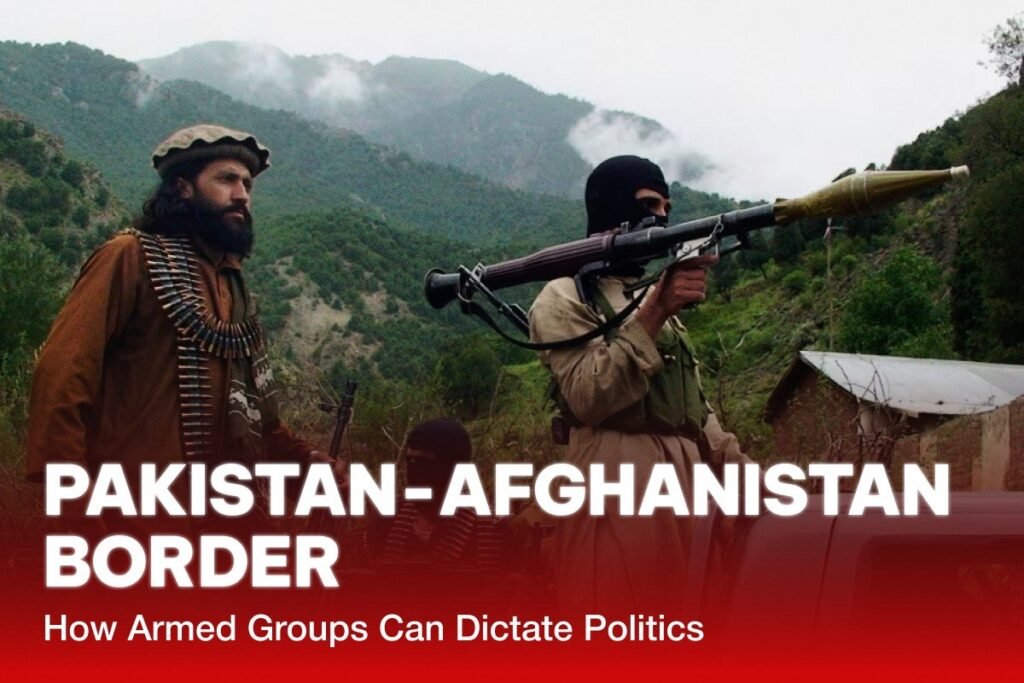
Pakistan’s military and Taliban have had more than two decades of supporting relationship. This has collapsed with the recent attacks.
Pakistan and the TTP, Afghanistan and the Taliban
In 2001, Pakistan backed the Taliban after the U.S.-led NATO invasion of Afghanistan to the point it was accused of providing haven for fighters as they rebelled against the occupation for 20 years.
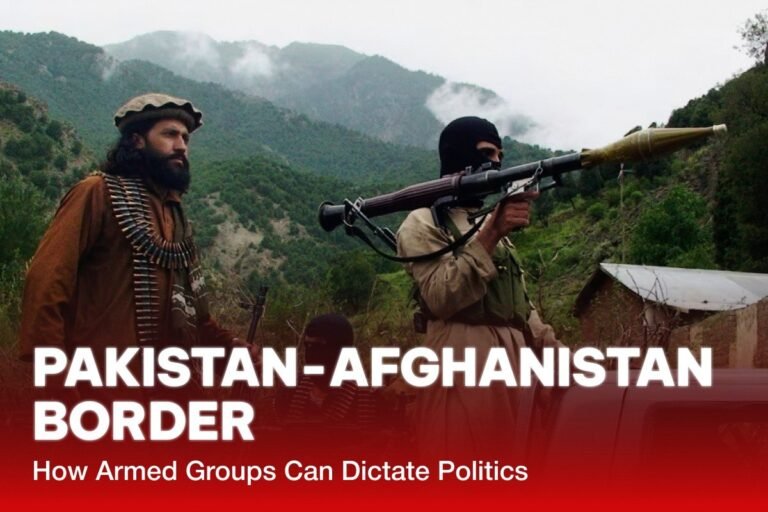
In 2007, the TTP arose after the Pakistani military conducted operations in tribal regions along the border supporting the US invasion of Afghanistan. Although both groups’ ideology align with the same ethnic Pashtun anti-Soviet resistance movement of the 1980s, their goals and operations are not the same.
Since 2021, when Taliban returned to power, Pakistan security forces have been unprecedentedly attacked. In August of that same year, Kabul mediated talks between the Pakistani military and the TTP, but Imran Khan, Pakistan’s prime minister when the conversations took place, was removed from office in 2022. The TTP left the ceasefire agreement that same year, accusing Islamabad of remilitarization. Although Afghan leaders condemned the attacks to Pakistani forces, they were seen as related.
Pakistan thought the TTP leaders would leave Afghanistan once a Pakistan-friendly Taliban government took power. Some returned but the violence didn’t stop as they demand “a localized implementation of Islamic law and the reinstatement of the former semi-autonomous status of tribal areas bordering Afghanistan”.
How are the four actors interlinked?
According to the Armed Conflict Location & Event Data (ACLED), the TTP conducted 600 attacks against Pakistani forces in 2024. The Pakistan Institute for Conflict and Security Studies data shows that August represented the “deadliest months of militant violence in more than a decade”. According to the Center for Research and Security Studies (CRSS) based in Islamabad, more than 2,400 people were killed in attacks all over Pakistan till September of 2025. The Pakistani government has blamed the TTP for most of these attacks, converting them into one of their biggest national security threats.
Pakistan demands a higher level of control and action against the TTP from the Taliban. The Pakistani government issues more mechanisms to control their regrouping or expansion within Afghanistan. Now, the relationship once based on shared regional security interests has collapsed: Islamabad claims Afghanistan is letting the TTP stay in their territory as almost a safe spot, which Taliban denies. However, independent UN experts have claimed that the Taliban gives financial support and let TTP fighters train in Afghanistan.
Time-line: from October 9 until now
On October 9, Taliban accused Pakistan of bombing two locations in Afghanistan, including Kabul. Although the attacks haven’t been denied or confirmed, Pakistan seemed to be targeting TTP’ camps and leaders.
On October 10, the Afghan government said that Pakistan targeted another location in their national territory: a civilian market in Paktika, a border province.
Over the weekend, Taliban produced an extensive fire against Pakistani troops at border posts. Dozens of casualties were reported due to violence at multiple fronts along the border.
The escalation continued on October 12: Pakistan claimed that more than 200 Afghan fighters were killed while Afghanistan said it killed 58 Pakistani soldiers. Taliban counter-argues that only nine soldiers were killed while Pakistan said only 23 of its fighters died. From Pakistan’s side, the attacks were “unprovoked” while Afghanistan claims to be an act of retaliation after violations of national airspace and bomb dropping.
On October 12, Pakistani forces affirmed they took hold of 19 Afghan posts in the border while Taliban claimed to have captured three Pakistani border posts along Kunar and Helmand provinces.
This overnight fighting coincided with Amir Khan Muttaqui’, Afghan Foreign Minister, visit to India, Pakistan’s regional rival.
Qatar, Iran and Saudi Arabia expressed concern over the tensions.
On October 14, Pakistan’s national media accused the Taliban and the TTP of opening fire near Kurram district and the crossing between Chaman and Spin Boldak districts. They said their national troops retaliated and also destroyed a TTP’s training facility.
On October 15, Afghanistan said that Pakistani firing killed and wounded multiple civilians; they said they had also killed Pakistani soldiers and seized border posts. Pakistan said it killed and injured more than 10 TTP members. Later, Pakistan’s air force carried out strikes in Kandahar, where the conflict in theory started, and Kabul. They claim to have targeted the headquarters of Taliban and local doctors confirmed that five people were killed while dozens were injured.
By Wednesday night, after the deadly clashes, both countries agreed on a ceasefire that was supposed to last 48 hours.
China, Russia and the U.S. had called for de-escalation on the border. Richard Bennett, UN special rapporteur on Afghanistan, said he was “deeply concerned” about the death of civilians and the displacement of the ones living in border regions.
The casualties claimed to be suffered by both sides couldn’t be confirmed by any media vehicles. Nevertheless, on October 16, the United Nations Assistance Mission in Afghanistan (UNAMA) confirmed 462 civilian casualties in Afghanistan during that week, caused by border conflict clashes in Paktya, Paktika, Kunar, Khost, Kandahar and Helmand provinces. There are no total numbers of civilian casualties from Pakistan.
On October 17, Pakistan attacked the southeastern Paktika province and other two areas close to the border provinces in Afghanistan. Afghan police said one of the targets was a civilian house and that multiple people were killed, including children. According Pakistani officials, the strikes targeted the Hafiz Gul Bahadur Group, linked to the TTP, which was responsible for the a suicidal explosion and gun attack earlier in the border of North Waziristan district, Khyber Pakhtunkhwa province. The act killed several people when attacking Pakistani security forces nearby. The number of deaths varied and Pakistan denied targeting civilians.
On October 19, Qatar and Turkey mediated talks between Pakistan and Afghanistan in Doha, and Qatar’s Foreign Ministry said that both sides agreed on an immediate ceasefire. There was no joint statement. Elizabeth Threlkeld, director of the South Asia programm at the Stimson Center, said that there are doubts about a lasting peace as “the talks in Doha were between Afghanistan and Pakistan, but the TTP and other groups involved are not parties of these talks or necessarily subjects to the agreement.”.
The talks conducted in Istanbul from October 25 onwards aim to reach a long-term agreement, but both sides seem to have interpreted the recent conversations differently: while Pakistan claims that Taliban is not cooperating, the Afghan side assures that the “meeting is going well”. According to Khawaja Muhammad Asif, Pakistan’s defence minister, not establishing a mechanism to enforce the previous ceasefire and the lack of an agreement at the end of the talks would mean “open war”.
Over the weekend and while the talks were taking place, clashes in the border left 5 Pakistani soldiers and 25 militants dead, according to the Pakistani military. The Afghan militants tried to enter Pakistan on Friday and Saturday through Kurram and North Waziristan.
Military, social and economic aspects
Pakistan has a more powerful military capacity when compared to Afghanistan, especially related to the air force.
Pakistan has also hosted, since the 1980s, millions of Afghan refugees; forcing them out could also be a key factor to use against the Taliban government.
Besides Pakistan absorbing 40% of Afghan exports, Afghanistan depends on trade routes through Pakistani land due to its lack of territorial access to the sea; they, however, are shut due to current tensions.
India, United States, Russia and China
The Pakistani army has accused India, without evidence, of backing the TTP. Therefore, fighting against the group is also part of its confrontation with India. Due to recent escalations between both countries, this border conflict could an important factor for future disagreements.
Pakistan has improved relations with the U.S. in the last months, while Russia recognized the Taliban as Afghanistan’s authority. These side-taking actions gives a fresh breeze of Cold War aspects, when these same great powers supported these same countries in order to expand their sphere of influence.
China adopted a mediator role due to its geographical frontiers with both nations.
A dilemma or not really?
The central aspect of the conflict is the porous character of the Pakistan-Afghanistan border. It is hard on the Afghan side to impose limits to the TTP activity — what maybe is not even wanted — or on the Pakistan’s side to build fences and expect these infiltrations to be gone.
Islamabad wants the Taliban to control armed groups such as the TTP and the Balochistan Liberation Army (BLA), in the Balochistan province. The Pakistani army has tried and has been trying to eliminate the TTP, but the easy movement between the countries makes it hard.
Nevertheless, the TTP and Taliban are not the same and this misconception can’t be used as an excuse to bomb another sovereign country. Together with that, expecting Afghanistan to solve a internal security problem can be seen as an attempt to take away the responsibility from Pakistan to face their structural questions related to armed groups.
The international community has limited influence on how this issue can be solved. However, the proximity of Pakistan with the U.S. and Afghanistan’s relations with Russia and India do affect how the situation is perceived from the outside and the inside. Besides, the concern of neighbour countries, such as Qatar and Turkey, into mediating negotiations shows that there is a real concern of future and bigger escalations, all due to the movement of armed groups in the border.
Historical Context
The Durand Line is the internationally recognized border between Afghanistan and Pakistan. Along the 2,600 km, there are twelve Afghan provinces and 3 Pakistani.
The demarcation came from the border between British India and the Emirate of Afghanistan established in 1893. At that time, Sir Henry Mortimer Durand, foreign secretary, negotiated with Abdur Rahman, Emirate of Afghanistan’s emir, to establish their spheres of influence. The Durand Line Agreement then established the frontier. From 1894 to 1896, a joint Afghan-British investigation defined the Durand Line and divided the Pashtun in two, leaving the region prone to future tensions as a result of tribal alliances divided by the border.
In 1947, the newly created country of Pakistan inherited the border. However, a movement for independence had emerged in the Pashtun area of both sides and Afghanistan refused to adopt the Durand Line, as they claimed it was an agreement imposed by the British. In that same year, Afghanistan was the only United Nations member to vote against the incorporation of Pakistan as a member.
In 1979, during the Cold War, the Soviet Union invaded Afghanistan and Pakistan aligned itself with the United States, so the border issue became secondary. Pakistani citizens were recruited to fight against the Soviets, especially from border areas including Pashtun. In 1989, when the Soviets left Afghanistan, the movement resulted in localized armed groups that participated in the Afghan Civil War (1978-1992), which led to the rise of the Taliban.
Afghanistan never recognized the Durand Line and continues to seek the Pashtun territories as well as Balochistan, their potential access to the Arabian Sea. In 2017, Pakistan’s construction of a fence in the border increased tensions.