
– Gabriela Mazzante
Imperialism (definition by Merriam Webster Dictionary): “the policy, practice, or advocacy of extending the power and dominion of a nation… by gaining indirect control over the political or economic life of other areas.”
What has happened?
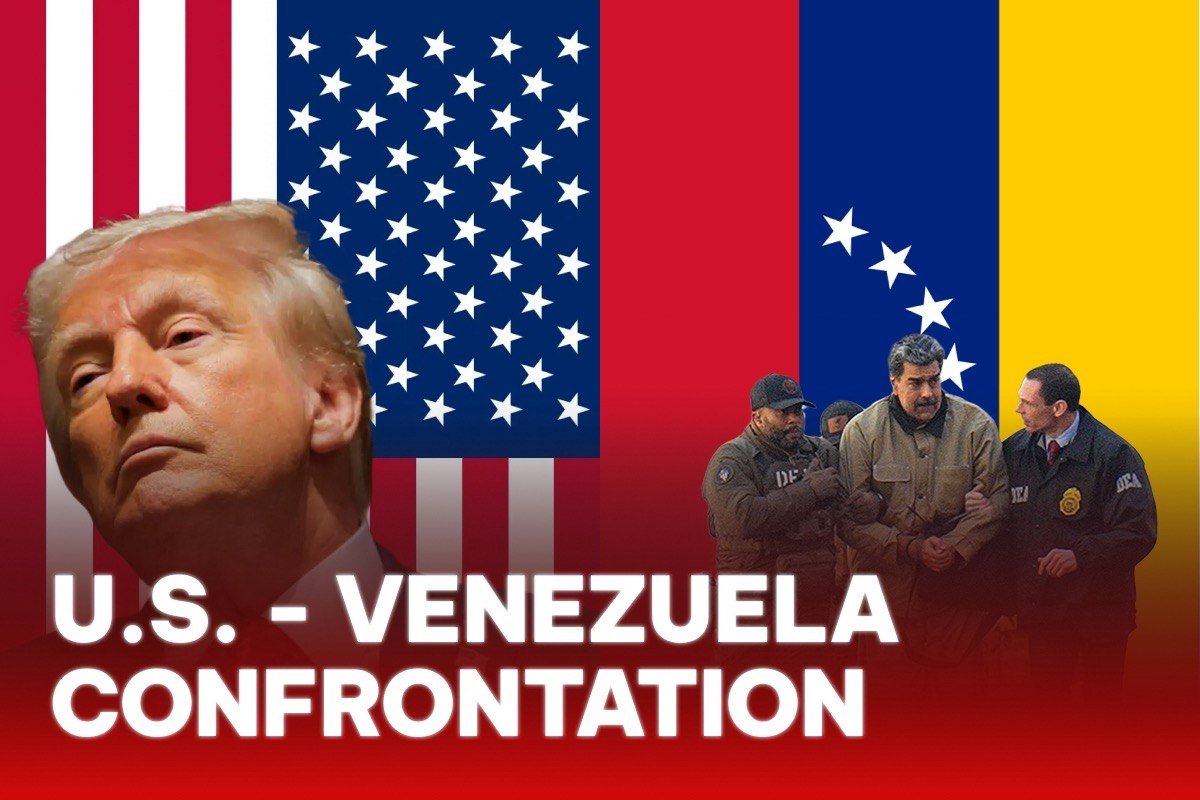
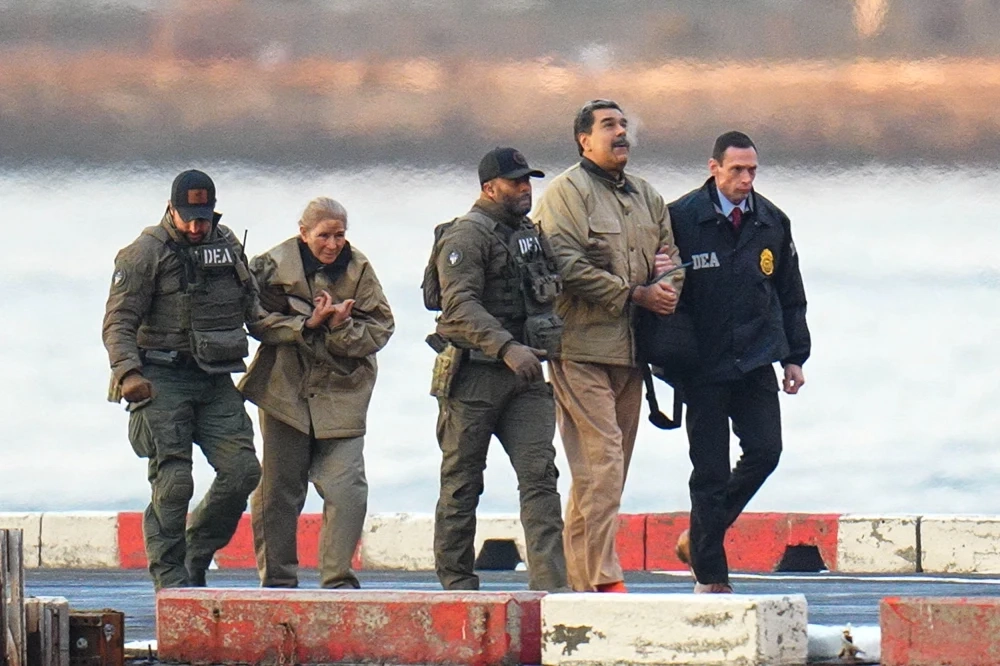
U.S. forces captured Venezuelan President Nicolás Maduro and his wife, Cilia Flores, during a large-scale operation in Caracas, marking the peak of tensions that have been building between Washington and Caracas since January 2025. As of January 5, the confrontation has already left a significant death toll: more than 100 people have been killed in U.S. strikes targeting alleged drug traffickers in the Caribbean, and at least 80 people, including soldiers, have died in land strikes carried out in 2026. As Venezuela enters this new phase, the country will now be led by Maduro’s vice president, who assumes the post as interim president while uncertainty surrounds the next electoral steps and the possibility of further U.S. pressure.
Washington frames its actions as part of a campaign against drug trafficking and a long-entrenched authoritarian ruler. Yet recent public comments by President Donald Trump and Secretary of State Marco Rubio suggest that control over Venezuela’s oil resources has become the central strategic priority. Maduro, for his part, has cast the operation as another chapter in U.S. interventionism in Latin America — an expression of the “American imperialism” long warned about by Hugo Chávez. Beneath the competing narratives lies a broader struggle over oil, narcotics, and migration that continues to shape U.S.-Venezuela relations.
Background: Relations Between Washington and Caracas
With the start of the Chavista presidency in 1999, Hugo Chávez reshaped Venezuela’s external alignments, maintaining closer relations with Russia, China, and Iran while nationalizing oil production. The project known as the Bolivarian Revolution relied on social programs funded by petroleum wealth and encouraged regional currents that challenged U.S. influence. That moment marked the first rupture: a mix of oil interests and ideological collision, accompanied by recurring accusations—some tied to actual attempts at coups—that would echo for years. After Maduro took office in 2013, the relationship with Washington deteriorated even further, and confrontation replaced coexistence. Le Monde
2014–2015 — The First Major U.S. Sanctions
Amid expanding protests inside Venezuela and allegations of abuses by state forces, the United States imposed visa restrictions and targeted sanctions on Venezuelan officials, inaugurating a long cycle of economic pressure that exacerbated the existing economic crisis. Inflation rose to three digits, industrial production declined after nationalizations in sectors such as electricity and steel, and outward migration surged as living conditions worsened. Al Jazeera
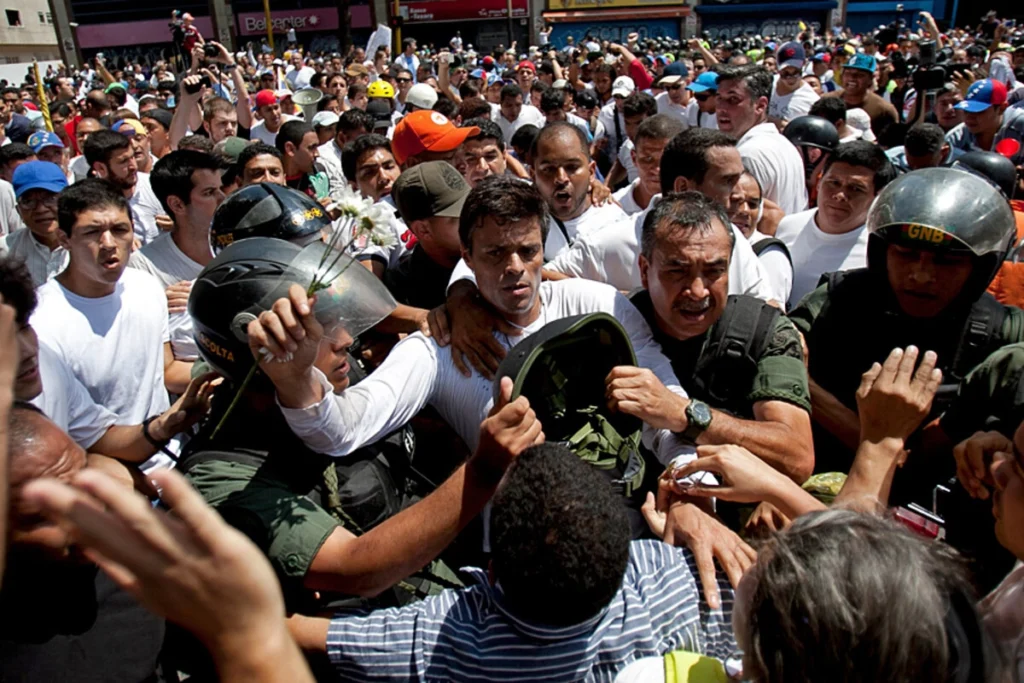
Photo: 2014 protests in Venezuela. Source: Alejandro Cegarra/AP
2017–2019 — Economic Collapse
Washington blocked Venezuelan access to U.S. capital markets and prohibited the purchase of Venezuelan debt, while sanctions on oil intensified. The economy slid into hyperinflation and falling non-oil exports under what observers described as years of mismanagement and underinvestment in the productive sector. Political institutions hardened alongside the economic breakdown: the Supreme Court moved against the opposition-controlled legislature, and Maduro issued a May 1, 2017 executive order opening the way for constitutional alterations that remodeled the National Assembly and strengthened executive authority.
By July 2017, opposition organizers claimed that about 7.2 million people participated in a plebiscite rejecting the pro-government constituent assembly and demanding early elections; Maduro dismissed the vote as unconstitutional, and the U.S. answered by freezing Maduro’s assets, escalating the sanctions strategy directly against the president himself. Le Monde
2024 — Opposition Exclusion and Contested Records
The 2024 presidential election again reignited polarization. María Corina Machado, the opposition’s main figure, was barred from running after a 15-year prohibition from holding public office, and the opposition registered Edmundo González Urrutia. After Maduro was declared the winner by the chavista-aligned National Electoral Council, opponents claimed access to around 75 percent of tally sheets showing González as the winner. Al Jazeera
2025 — Why Venezuela Became a White House Priority
The question of why Venezuela turned into a central file of U.S. foreign policy in 2025 has been linked, according to internal sources from The New York Times, to a broader picture of anti-immigration politics led by Deputy Chief of Staff Stephen Miller and to Marco Rubio’s stated goal to overthrow the governments of Venezuela and Cuba. Anti-immigration + drug combat combined with frustrating oil negotiations between US and Venezuela — particularly involving Chevron licenses — angered President Trump in late May 2025. The Alien Enemies Act was mentioned by Miller as a potential tool if the United States and Venezuela were at war, allowing the administration to expedite deportations of hundreds of thousands of Venezuelans who had been stripped of Temporary Protected Status. NYTimes
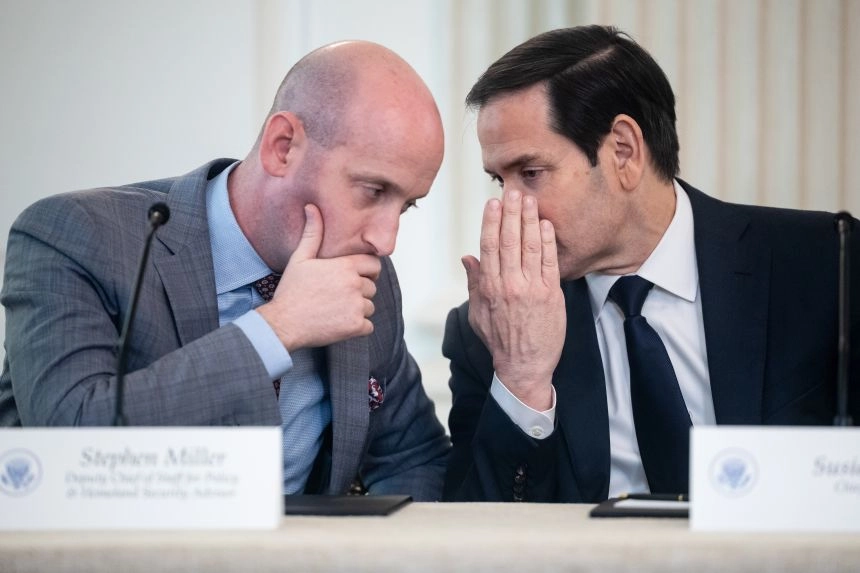
Photo: Stephen Miller (left) and Marco Rubio (right) on October 8. Source: Francis Chung/Bloomberg/Getty Images
Timeline: key U.S. actions and turning points (Jan. 2025–Jan. 5, 2026)
January, 2025
- Jan. 10, 2025: Maduro is sworn in for another term after a disputed election cycle; the U.S. rejects the result. AlJazeera
- Soon after Donald Trump returned to the White House, he revoked Temporary Protected Status for roughly 600,000 Venezuelans who had been shielded from deportation, placing immigration at the center of the bilateral agenda. AlJazeera
- Jan. 20, 2025: Trump signs an order enabling the designation of criminal organizations as “foreign terrorist organizations,” setting the stage for later moves involving Venezuelan-linked groups.
February, 2025
- Feb. 20, 2025: The Trump administration designates Tren de Aragua as a “foreign terrorist organization,” and Trump argues it is linked to Maduro — while U.S. intelligence agencies disputed evidence of such a link.
- Feb. 21, 2025: Caracas coordinates with Washington on deportations; the first group of deported migrants arrives in Venezuela. AlJazeera
- Feb. 26, 2025: Trump revokes certain Venezuela-related oil concessions previously in place. AlJazeera
March, 2025
- Mar. 24, 2025: Trump announces 25% tariffs on countries buying Venezuelan oil. AlJazeera
August, 2025
Aug. 8, 2025: The U.S. doubles the reward for information leading to Maduro’s arrest to $50 million, tying Maduro to alleged narco-terror activity. AlJazeera
Sept.–Nov. 2025: maritime campaign and force buildup
- Starting early Sept. 2025: Washington launches an “anti-narcotics” maritime campaign; by AP’s count, 35 known strikes on alleged drug-smuggling boats had killed at least 115 people before the January 2026 operation. AP News
- Oct. 2025: Venezuela suspends a gas accord with Trinidad and Tobago after a U.S. warship visit, amid growing regional military tension. AlJazeera
- Nov. 2025: Venezuela conducts nationwide military drills; the U.S. announces “Southern Spear” and deploys major assets to the Caribbean, including the USS Gerald R. Ford and additional forces. AlJazeera
Dec. 2025: oil enforcement and first confirmed strike on land
- Dec. 10, 2025: The U.S. seizes an oil tanker off Venezuela’s coast carrying roughly 2 million barrels of crude, according to AP reporting on the case.AP News
- Dec. 30, 2025: Trump confirms a U.S. strike on a Venezuelan coastal facility allegedly used to load narcotics — marking a shift from maritime interceptions toward a target on Venezuelan territory. AP News
- Dec. 31, 2025: The U.S. imposes new sanctions targeting companies and tankers tied to Venezuela’s oil sector. Stabroek News
Jan. 2026: capture of Maduro and political rupture
- Jan. 1, 2026: Maduro signals openness to negotiating with the U.S. on counter-narcotics cooperation. AP News
- Jan. 3, 2026: The U.S. executes a large-scale operation in Venezuela and captures Maduro and Cilia Flores, with Maduro transferred toward the United States to face criminal charges. El País
- Jan. 4, 2026:Delcy Rodríguez becomes interim president.
- Trump told The Atlantic that Rodríguez would pay a high price if she did not cooperate with Washington. Rodríguez has been under sanctions since 2018 by the United States, the European Union, Canada, Mexico, Switzerland, and Switzerland for corruption and for undermining democracy. G1
What Maduro’s Capture Means for Venezuela’s Allies
The episode revived a wider debate about international law and spheres of influence. Political scientist Oliver Stuenkel argues that by attacking Venezuela, Trump reinforces a “great powers can do what they want in their neighborhood” logic—an approach that echoes how Russia has justified pressure on Ukraine’s sovereignty and could be used by China if it chose to escalate against Taiwan. Stuenkel’s broader point is that the operation signals a return to a world closer to the 19th century, when influence zones mattered more than multilateral legal constraints. G1
China, Russia, and Iran have reacted to the January 2026 operation with public condemnation from their diplomatic channels, rejecting the U.S. actions in Caracas and across the Caribbean. Iran’s foreign-affairs spokesperson called for Maduro’s immediate release on January 5 and demanded respect for Venezuela’s sovereignty, echoing the language that chavismo has used for decades to describe U.S. pressure. APNews Moscow’s posture has been more cautious, but reporting from Folha de São Paulo revealed that, in the days before the raid, Maduro had negotiated a possible exile in Belarus with Russian backing, suggesting that Russia was preparing contingency plans rather than a direct confrontation with Washington in the Caribbean. Folha de São Paulo
The US attack also exposed the limits of China’s reach in South America and the Caribbean. Venezuela has been one of China’s largest partners for foreign aid and infrastructure financing, and Venezuelan crude represents about 5% of Chinese oil imports while accounting for nearly 80% of Venezuela’s external demand for its own oil, a dependency that increased Beijing’s stake in Maduro’s continuity. Even so, Maduro’s detention—occurring as a Chinese delegation had just arrived in Caracas—demonstrated that Washington was capable of acting without regard to China’s economic footprint in the Caribbean. Economist
Beyond Caracas, China has expanded its economic presence in Latin America in ways that have affected U.S. calculations in Washington and in the Caribbean basin. Satellite images indicate electronic-surveillance facilities built in Cuba, a Chinese-run deep-space radio station in Argentina, and investments ranging from nickel mining to electric-vehicle production in Brazil. The most controversial stake remains the ownership of ports near the Panama Canal by a Hong Kong conglomerate, which the Trump administration has sought to transfer to American investors. Beijing has stood firm on those holdings, but the capture of Maduro illustrated that China could protect assets while still being unable to shield an ally from U.S. military will. Economist
Implications for Latin America
Jan. 04 2026:
Trump: “Don’t ask me who’s in charge (of Venezuela), because I’ll give you an answer, and it’ll be very controversial.”
Pressed on what that means, he said: “We’re in charge.
In recent interviews from january, Trump broadened accusations beyond Venezuela. Statements affirming that Mexico’s government was run by cartels and that Colombia allowed cocaine production to continue illustrated how Washington is extending the intervention narrative across Latin America and the Caribbean Politico. The region now faces the clear signal that the United States is capable and willing to engage in regime change, either through indirect channels or through direct military force — a dangerous precedent when US Congress approval was overlooked and transparency toward Democratic senators was limited. Al Jazeera
Voices critical of the Venezuelan government describe the event as the end of a long authoritarian cycle, while others point out that a third country executing arrests and strikes without multilateral authorization raises serious legal doubts. The Venezuelan population has endured deep hardship during Maduro’s years in office. Economic collapse, chronic inflation, and the repression of dissent pushed more than seven million Venezuelans to leave the country. Maduro was rejected by the majority of citizens affected by these conditions.
Yet the January 2026 operation raises doubts about how that suffering will be addressed after Maduro’s fall. The White House interviews from the first five days of 2026 did not mention reconstruction plans, new elections, or humanitarian aid. Instead, the operation was tied to Washington’s priorities on oil control, drugs, and immigration in the Caribbean and in Caracas, suggesting that external pressure focused more on securing petroleum income than on rebuilding Venezuelan institutions. That approach sits close to the dictionary definition of imperialism placed at the top of the article — expanding dominion through indirect control over the economic life of another area.
The current transition suggests that Washington expects any future Venezuelan leader to respond to U.S. strategic priorities, raising the question of whether Maduro’s fall represents only a replacement at the top or a deeper transformation of how the country is governed. The interim president must navigate a tightrope between external demands from the United States and the loyalty networks within the PSUV that continue to control the state. Daily life in Caracas remains constrained, and the chavista structure has not disappeared with Maduro’s detention. Recent reports describe continuing pressure on journalists and the persecution of opposition voices carried out under the authority of the new leadership Reuters. For many Venezuelans, the promise of relief still feels distant, and expectations of freedom and economic recovery remain unresolved. The population now waits to see whether the next chapter will address their hardships or simply reproduce the old patterns under a different name.