
– Desmond Verbani
Introduction
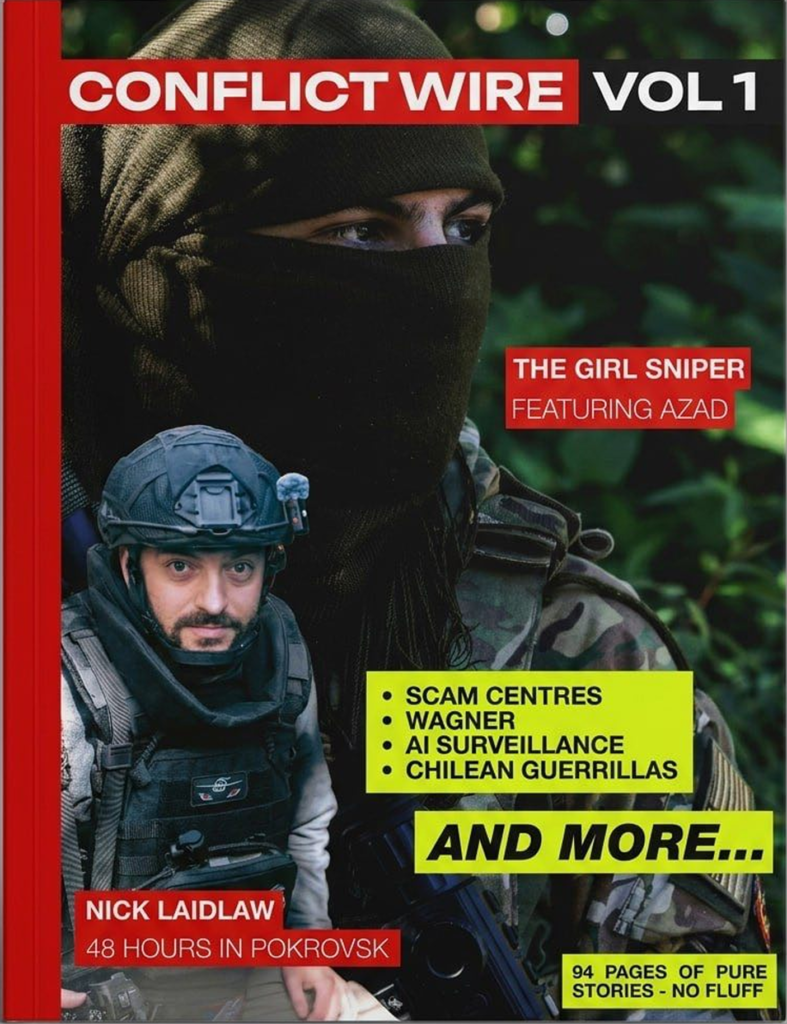
This was my first ever trip into Karen State, into Myanmar, and frankly, my first time ever in Asia. I initially had plans to meet a foreign fighter with the Rammonya Mon Army in Bangkok, Thailand, before sneaking through the Thai-Myanmar border into Mon State itself. The plan was unauthorised, and my personal preparation barely existed.
At that time, tensions were quite high, not just at the border, but in Myanmar itself. The sham elections were looming ever closer, and an Ethnic Armed Organisation, the Ta’ang National Liberation Army, had just signed a ceasefire with the Junta, via pressure from China – everyone seemed to be on edge. After all, if China could force a revolutionary group to surrender, what hope could the revolution truly have of standing on its own feet? How far can China pressure the armies within Myanmar to do its bidding?
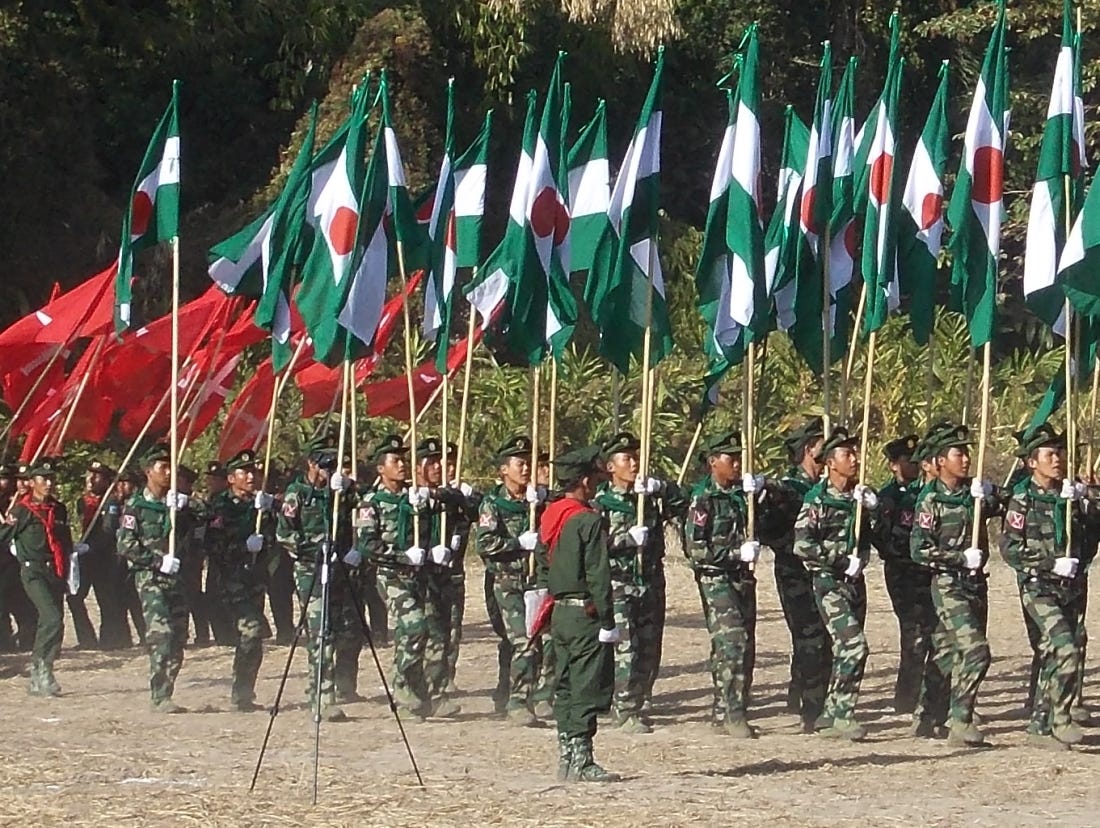
Photo: Ta’ang National Liberation Army
It was not time for such thoughts however, despite the varying degrees of conversation about the conflict at that time. I had already bought my ticket to Bangkok, and got my belongings ready for the journey. Only, the foreign fighter had received bad news. As is usual with this kind of work, information regarding travel often arrives last minute – leaving you little room to prepare adequately.
It seemed his contacts in the RMA advised him not to go.
An outwardly brave man, and quite an interesting character, he debated going anyway, and making an unauthorised crossing, with zero external assistance, to which I agreed, however we left the certainty of our face-to-face meeting in Bangkok ambiguous. By the time I landed at BKK Airport, it was obvious to me that the intended trip was not going to happen – at least, the way I thought it was going to.
I went about my trip anyway, intending to meet another contact – someone reputed to be deeply connected within the Karen resistance. After a few days drifting through Bangkok’s vast sprawl of streets, markets, and bars, I set off toward Mae Sot, a border town pressed up against Myanmar. I planned to meet the contact there once I had settled in.
Instead, I spotted him boarding the very bus I was on. Whether by coincidence or something more theatrical, we had ended up on the same bus, at the same time, heading to the same destination.
We spoke casually. Despite having already exchanged messages, this was the first time we met face-to-face. His presence carried a quiet gravity – something that inspired both caution and respect – yet he was warm, measured, and immediately disarming. From that moment on, it became clear that my time in Thailand would orbit almost entirely around Mae Sot.
Connections
I had been warned beforehand that he might attempt to intimidate – perhaps by surrounding himself with plain-clothes fighters during our meetings. Though that never materialised.
The evening after the bus ride, we met at a café. This was where we laid out, plainly, what my presence in the region could realistically look like. He arrived with just one other person: broad-shouldered, clearly a fighter despite the lack of uniform, and unexpectedly gentle in manner. If anything, he was even kinder than the man leading the conversation. Any tension I had carried with me dissolved quickly, and what followed felt less like a negotiation than an honest exchange.
By that stage, I had already written off the idea of crossing into Myanmar. My plan had been modest: a few interviews, perhaps a visit to a refugee camp, then onward to Chiang Mai to connect with members of the Burmese diaspora.
That plan evaporated over the course of our discussion. After talking at length about my aims, my work with Conflict Wire, and the broader dynamics of the war, he casually offered to take me across the border. The speed and certainty with which he extended the invitation caught me off guard. Entering Myanmar had felt abstract, distant – suddenly it was immediate. I accepted.
When we left, he drove me back toward my hotel, but the conversation shifted. He spoke candidly about the density of eyes in the city: Burmese intelligence networks, militia-linked groups, criminal intermediaries, and other actors who thrived in border economies. We agreed it would be safer if I didn’t stay where I was. Instead, I would sleep at a friend’s place – run by someone known locally as Whisky.
The place doubled as the base for Whisky’s work. Practical, lived-in, the kind of space that exists to be used rather than presented. Normal life and the machinery of a conflict were sharing the same floor.
It was here where I was swiftly reminded of the proximity of Mae Sot to Myanmar. The effects of a war in a country just a few miles down the road was becoming clearer and clearer to see. Enough so that within just a few days of my stay, an acquaintance of Whisky had been scammed by a woman affiliated with the BGF just across the border.
His acquaintance was led to believe they’d receive an iPhone 12 at a discounted price, only to pay and not receive anything at all. This was a copycat scammer, someone influenced by the rampant scamming in the centres across the border. With his local connections, the scammer was swiftly found, questioned, and threatened with action by the police if the money was not returned. Many times, her associates rode by on mopeds, stopping, watching, messaging on their phones and riding away only to come back minutes later.
Soon enough, an agreement was reached, and the money was returned by a different party the next day.
Yet another inkling into how the events taking place across the border have been beginning to trickle into this border town.
Denied Entry
By this point, the men I initially met had agreed on a date for the crossing. Though as I awoke on the day of the supposed trip, I was told that it was too dangerous, that things were heating up around Myawaddy and they couldn’t take a foreigner across without great risk of the Thai Border guards and possible injury.
Little did I know, the whole region there was about to engulf itself in intense, bloody firefights as KNLA Brigade 6 fighters were on their way to liberate the scam centres – the day of the crossing was to be the first of many days of combat in the area. It seems they denied my entry because some of the higher ups knew what was about to go down.
A foreigner who came to help as a combat medic was to be on this trip, and I had the pleasure of meeting him and later interviewing him on his experience in Myanmar. Though, there was a feeling of dread on the day of their departure, not at the fact I was denied the crossing, but because I had a horrible sense of deja vu telling me something was going to go wrong when they were there.
I was right.
On their return, I was informed that right after the crossing was made, around 50 DKBA soldiers ambushed their party of just a handful of men. At some point during the engagement they had stopped firing and began having a verbal altercation with the crossing party – who were officially a part of the KNU – and one member of the crossing party grabbed the barrel of a DKBA soldiers gun, pointed it at his own head, and threatened that they ‘may kill us today, but tomorrow our boys will find you and kill every single one of you’.
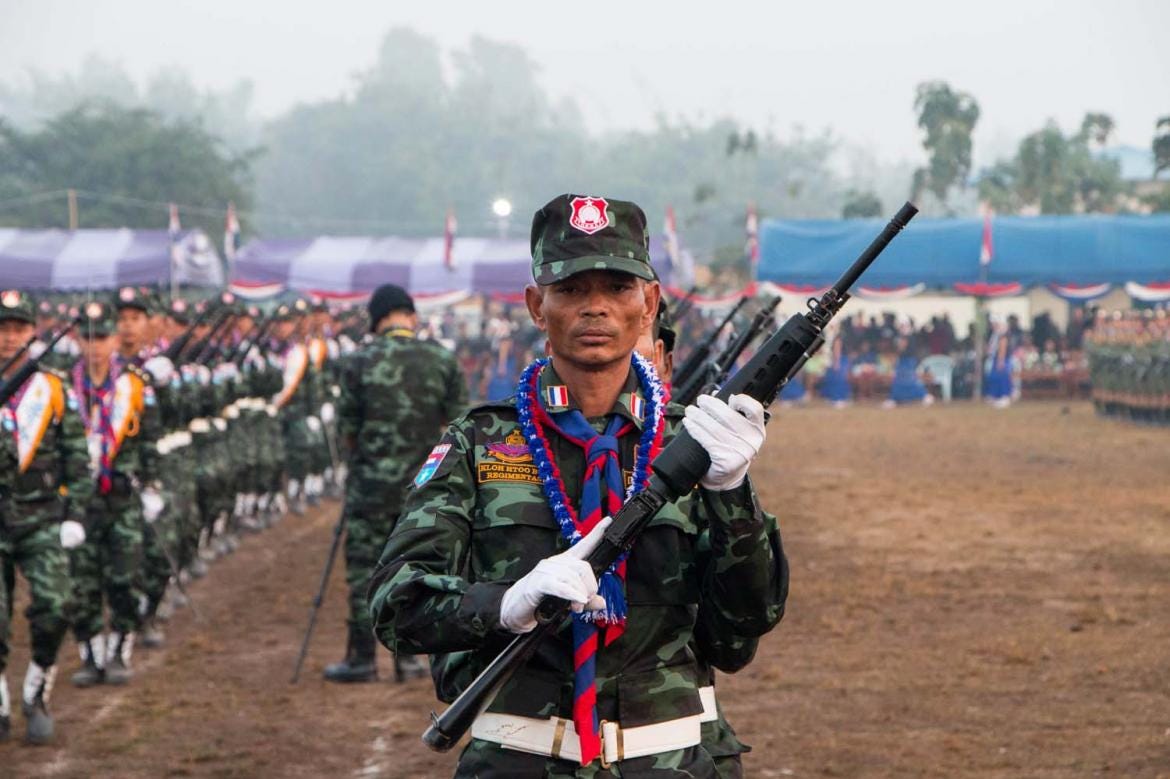
Photo: DKBA soldiers in parade – Thuya Zaw – Frontier Myanmar
In an area where everyone roughly knows everyone, whether by a friend of a friend, or a family member, this was not an empty-handed threat. And the DKBA soldiers themselves knew that, to which they retreated back to their base.
This clash, coincidentally, seemed to have spilled into a wider battle, where the KNLA proceeded to capture Min Let Pan, capturing 60 DKBA soldiers and liberating the scam centre there.
It seems what had me initially disappointed, the inability of crossing into Myanmar, had been a blessing in disguise. One can only guess how things might have went down if I had been a part of that crossing party.
A New Way…
Still looking for possibly a new trip elsewhere in-country, I had been speaking to a friend of Whisky’s, who offered to take me to Brigade 4. I’ll be referring to him as my guide from hereon out. Truthfully, I had no idea where any of these Brigades, which function like counties or states within the KNU, were. Regardless, I agreed.
The plan was to spend one week across in Myanmar, but close to the border, and just get used to the jungle, go hunting with the men, and feel out how it is there. Then we would spend another two weeks travelling deep into the jungle, making our way to a village, and then the commander of that particular region of Brigade 4.
We began our journey, back through Thailand, taking a bus, then tuk-tuk to a village where we would get a ride to an area close to the border.
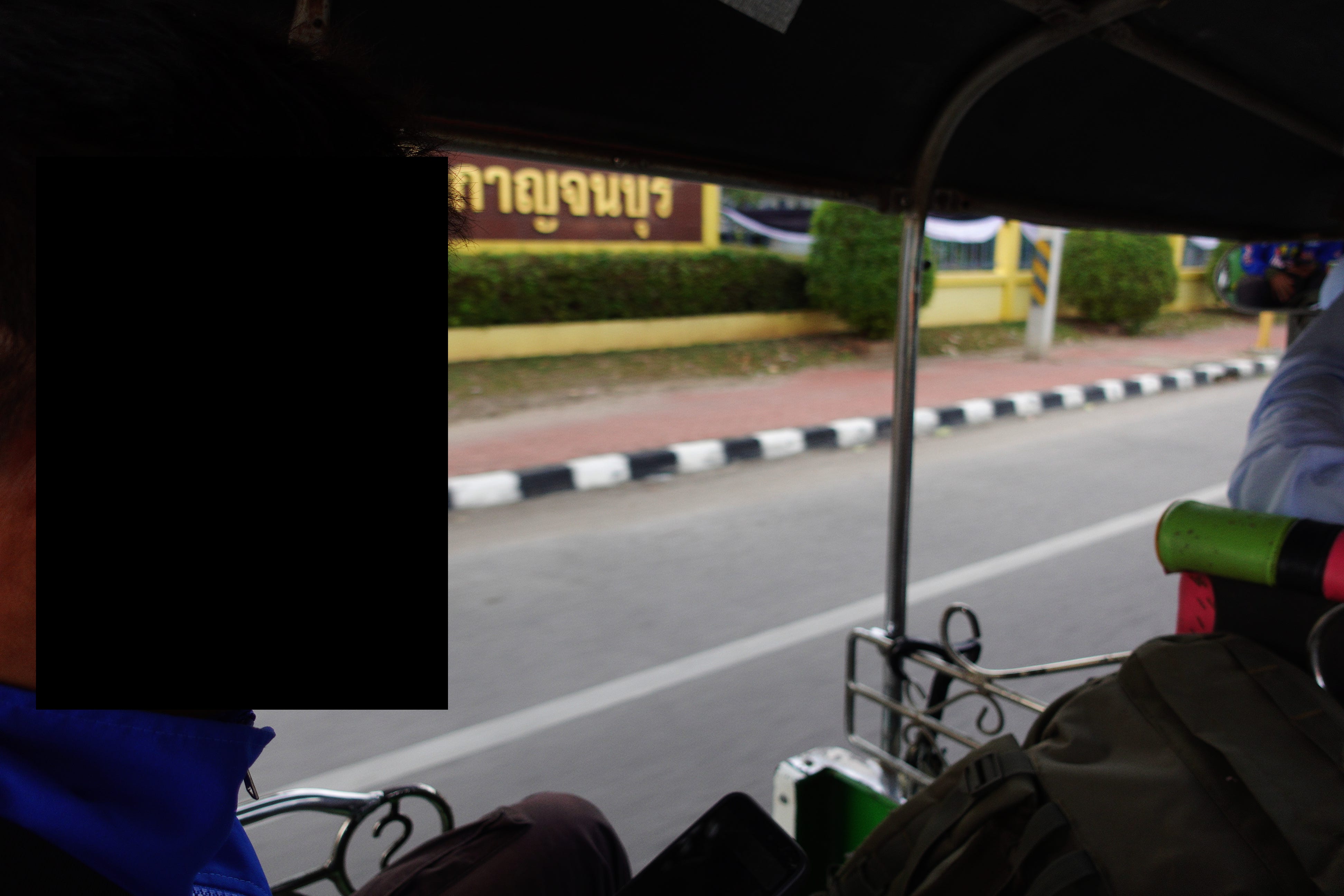
Photo: Tuk-tuk ride to the border – Desmond Verbani – Conflict Wire
This was where the reality of how the trip was going to be was beginning to show itself. We trekked five hours up and down a mountain, of which I honestly struggled. From here we rested overnight at his Uncle’s home. Though, some bad news had come from his Uncle’s radio. After 15 minutes of back and forth conversation on their radio, I was informed that 300 Junta soldiers were spotted deep in the direction we were headed. They debated calling the trip off completely because of this news, though, I wanted to keep going.
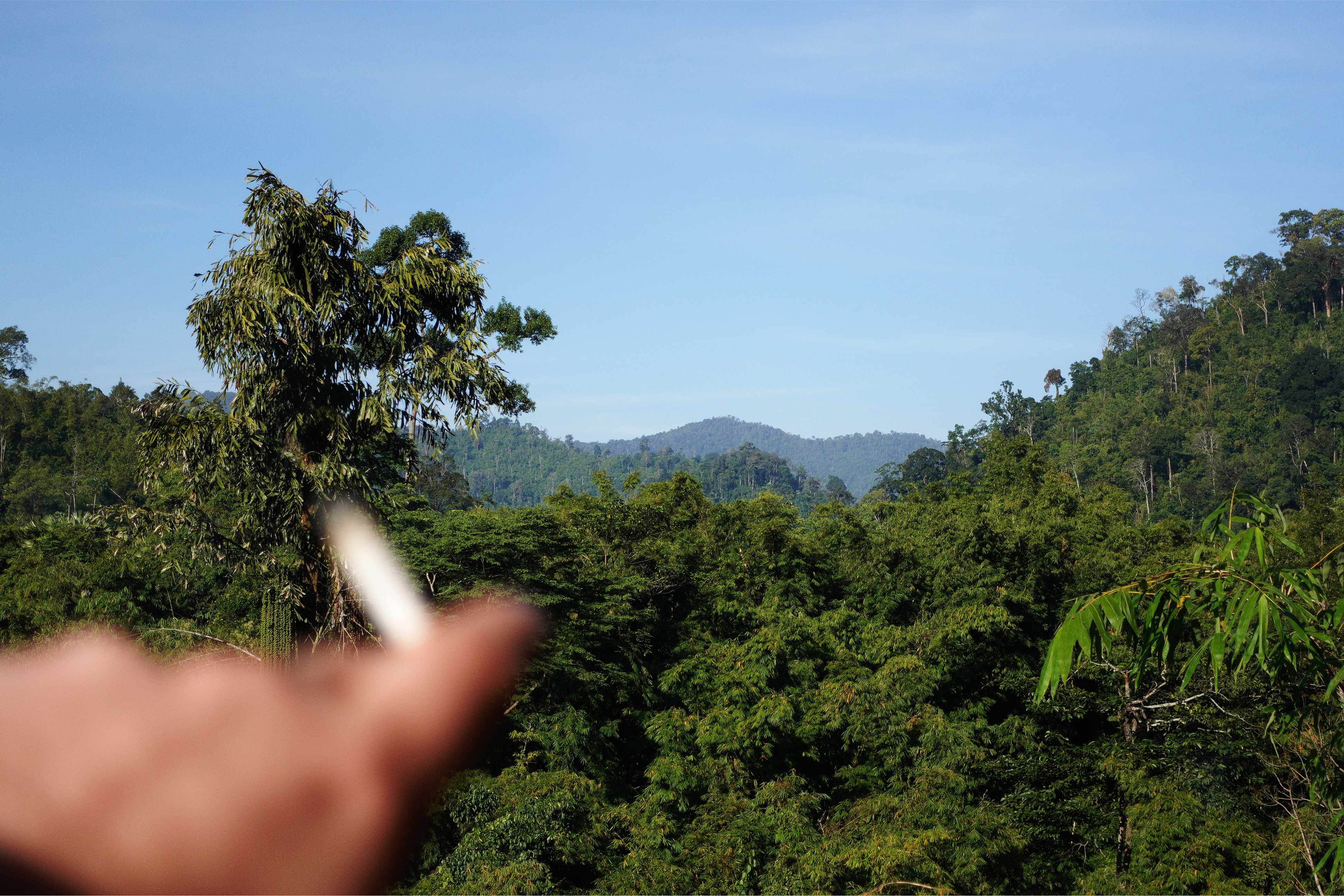
Photo: After making it across the border, I point toward where the 3 junta columns were reported – Desmond Verbani – Conflict Wire
We agreed to shorten the three week trip into less than a week, and thus we began the gruelling march through the jungle towards our destination.
The “Galawa”
White foreigners in Karen State are often referred to as “Galawa”, which means quite literally, “white outsider”. It’s not meant to be a term of discrimination, but rather a functional way of identifying and referring to someone who is not Karen.
The reason I mention this is for two reasons, 1) It’s interesting, and 2) Because as per their probable expectations, I, the “Galawa”, found the trip to be incredibly hard to complete. Having never been in a jungle before in my life, I personified the “outsider” definition of the aforementioned word.
Just four hours of trekking through river, uphill, downhill, river, uphill, downhill, rinse and repeat, I had to stop and get my bearings. They were acutely aware of how taxing it was on my body, and I was astonished at their capability to trek this jungle so effortlessly.
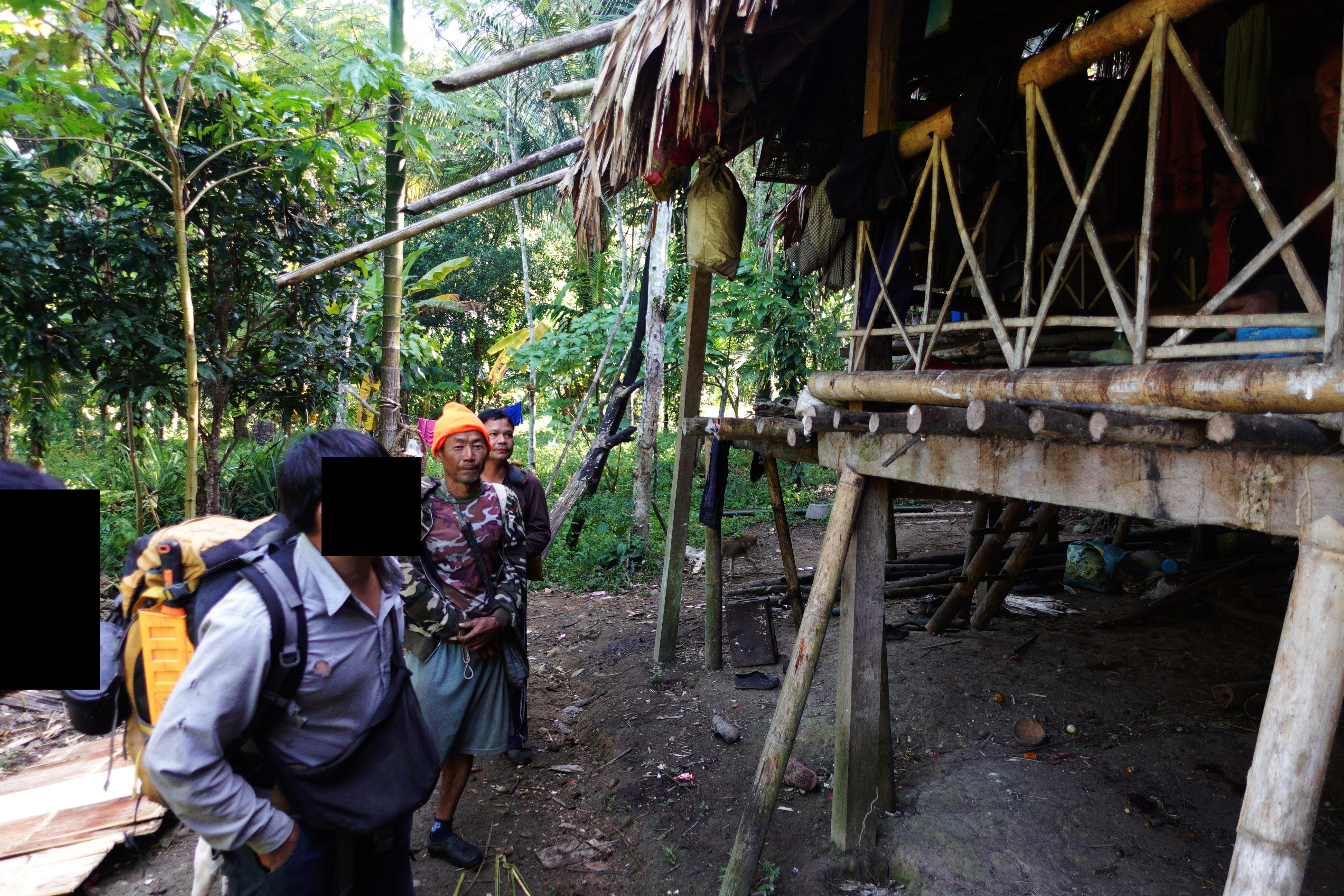
Photo: Visiting homes along the way to the rest of Brigade 4 – Desmond Verbani – Conflict Wire
On many occasion through this trip I half-seriously, half-jokingly, wondered why there were no actual roads anywhere. It was explained to me that it was fundamentally a strategic decision. This region of Karen State, that being Brigade 4, was quite peaceful when you were inland, and they aimed to keep it that way. If they built roads, the Junta would be able to utilise them to spearhead attacks and capture the entirety of the Brigade. There were no bombings where we were, no threats of jets or drones, and they had no intention of giving the Junta a reason to bomb such a peaceful area.
During this period where I was getting my bearings, they considered calling the trip off, and making our way back. Though after a night of rest, we decided to keep going. I would leave my bag at a nearby occupied hut, and carry only the essentials, so as not to tax my body too much as we continued the journey.
I would love to say I was a badass Tarzan making my way through the jungle like it was nothing, but the simple truth is, it was unbelievably difficult. For them they grew up in the jungle, they live in the jungle, and what took me three days to cross, would only take them one. We had to walk through rivers where the only floor to walk on was huge slippery, mossy rocks and boulders. We gripped tight, crossing cliff faces above the river where it was deep and fast enough to turn you into the next addition on a missing persons list. Cliffs themselves seemed to be rationing their supply of room to set your toes on so you could climb across them. Yet again, for them, this was utterly regular.
This was something I found astonishing at the time, and continue to do so now, where the privileges given to us in the Western world became blindingly obvious. In the West, you can drive in peace, or catch a bus, and travel miles and miles and miles to do anything, with very little thought as to your journey. However here, in Brigade 4, if you wanted to get anywhere, you had to march up steep hills, over cliffs, through waist deep rivers – sometimes just to visit a nearby friend. The privilege of having a road to drive your truck down wasn’t much of a privilege per se either. You may be saving yourself the effort of the trek, however you risk drone or jet bombing as a result.
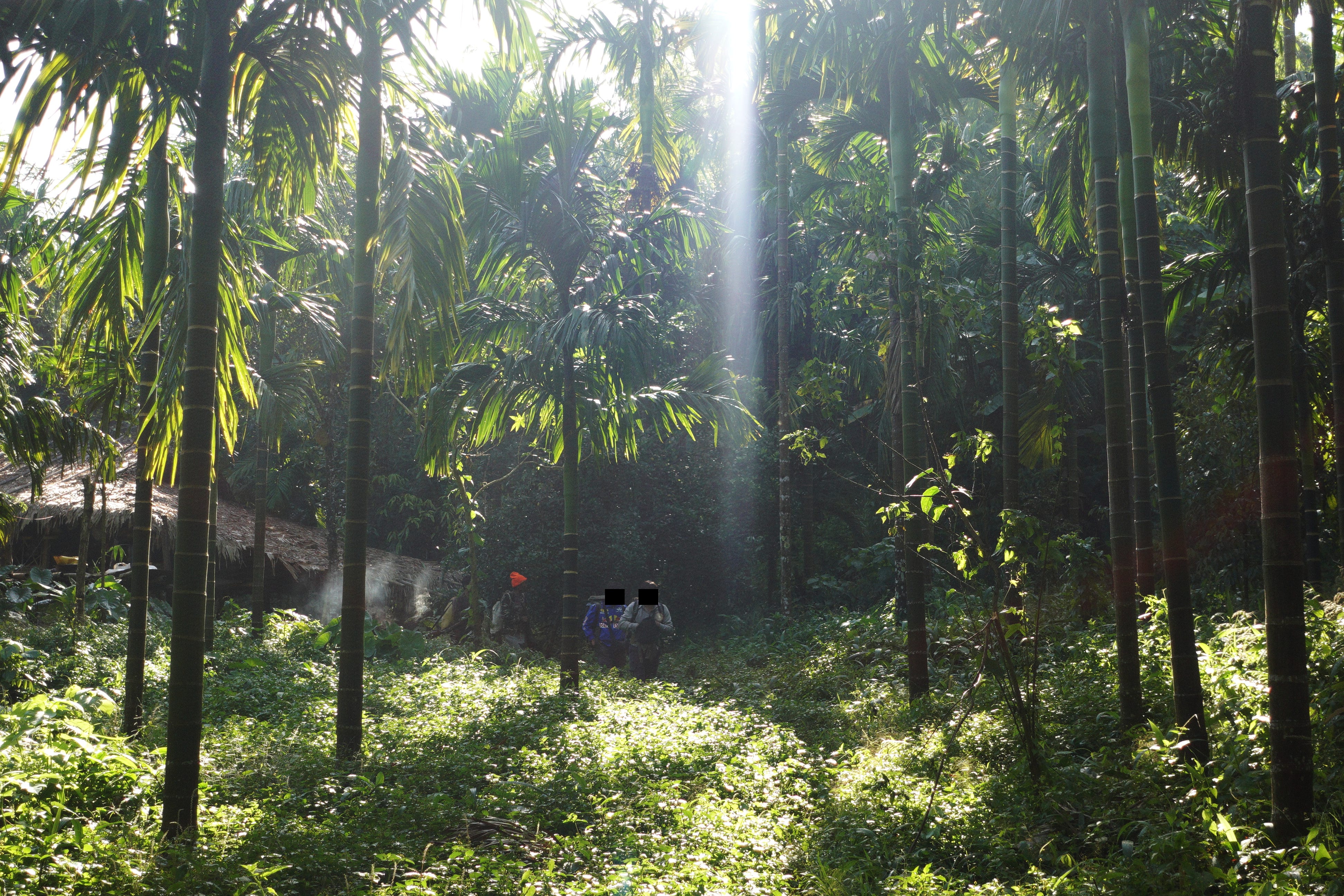
Photo: Travelling through the jungle – Desmond Verbani – Conflict Wire
Nevertheless, the surroundings, and relatively untouched wildlife, was utterly stunning. In the occasional respite provided, where we sat, rested, and regained our energy to continue the march, the jungle around us was vibrant. Tall trees with birds chirping their tunes, as small waterfalls nearby fed their water into the river upstream. Despite the fact Karen State is in wartime, the jungle remained quite untouched there in Brigade 4, and I couldn’t help but think to myself that if there ever was a Garden of Eden, it must have been like this.
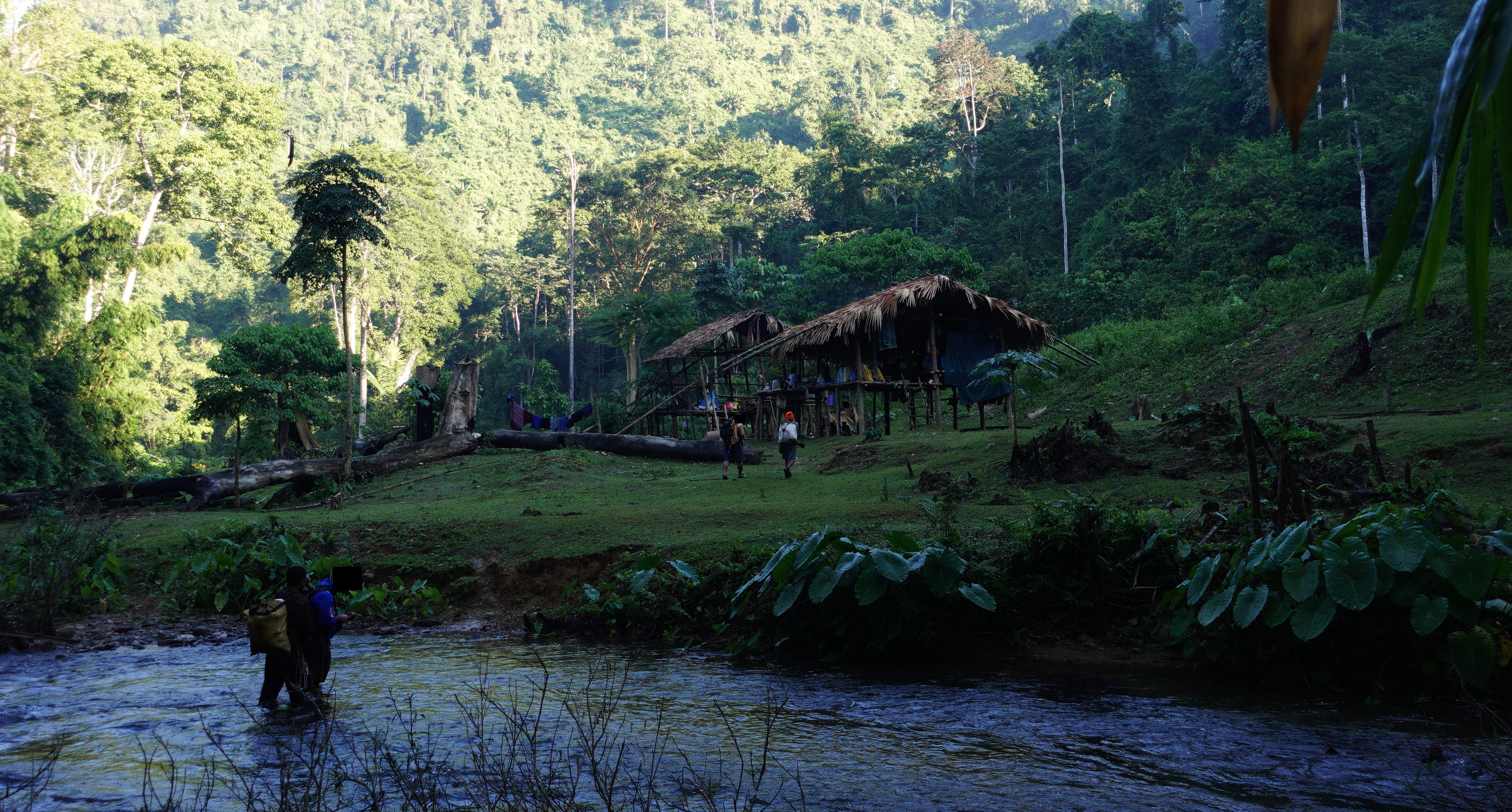
Photo: Temporary lodge by the river – Desmond Verbani – Conflict Wire