
– Olivia Garcia
What happened?
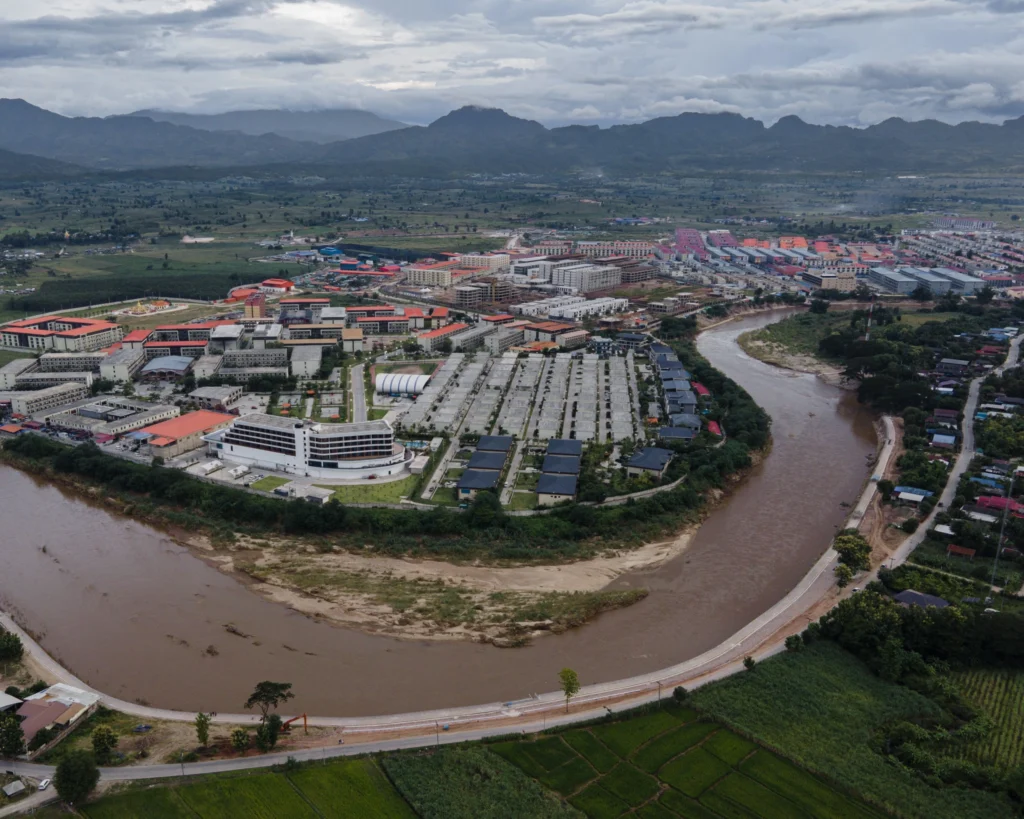
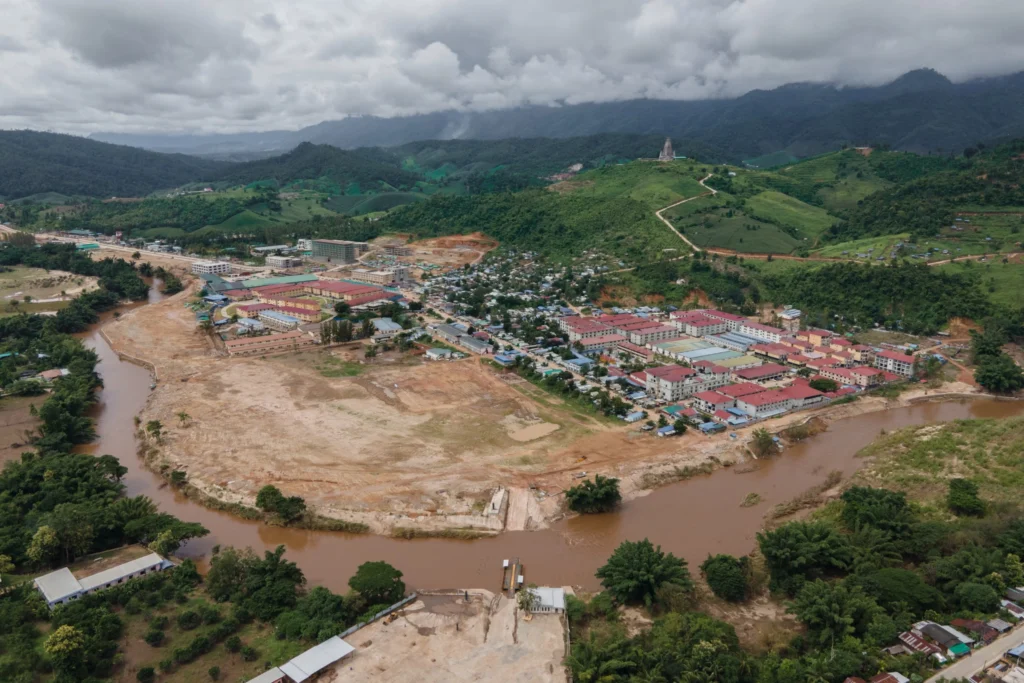
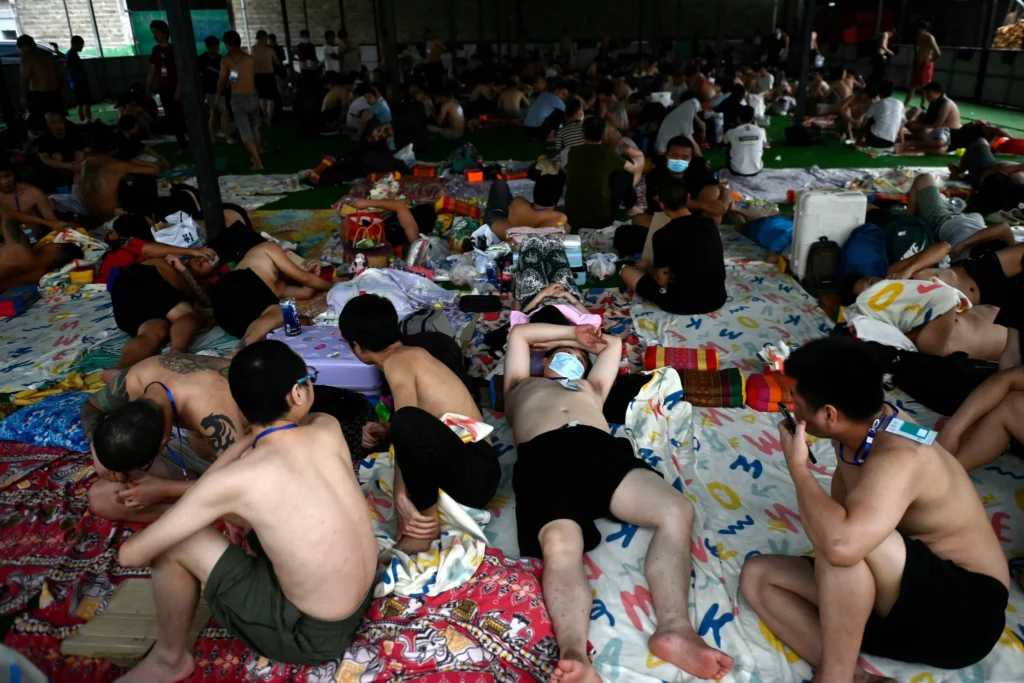
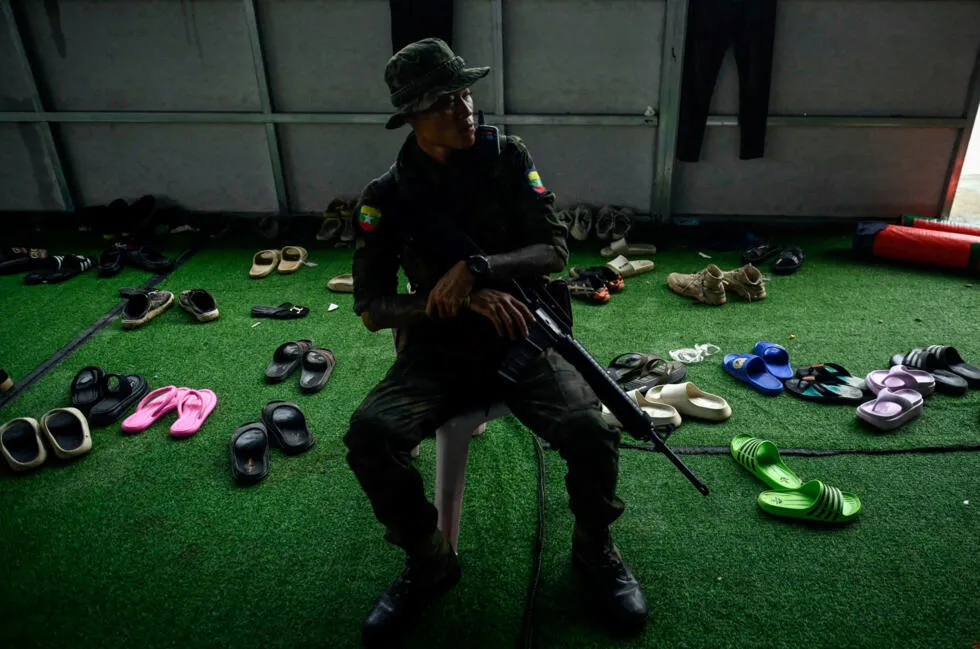
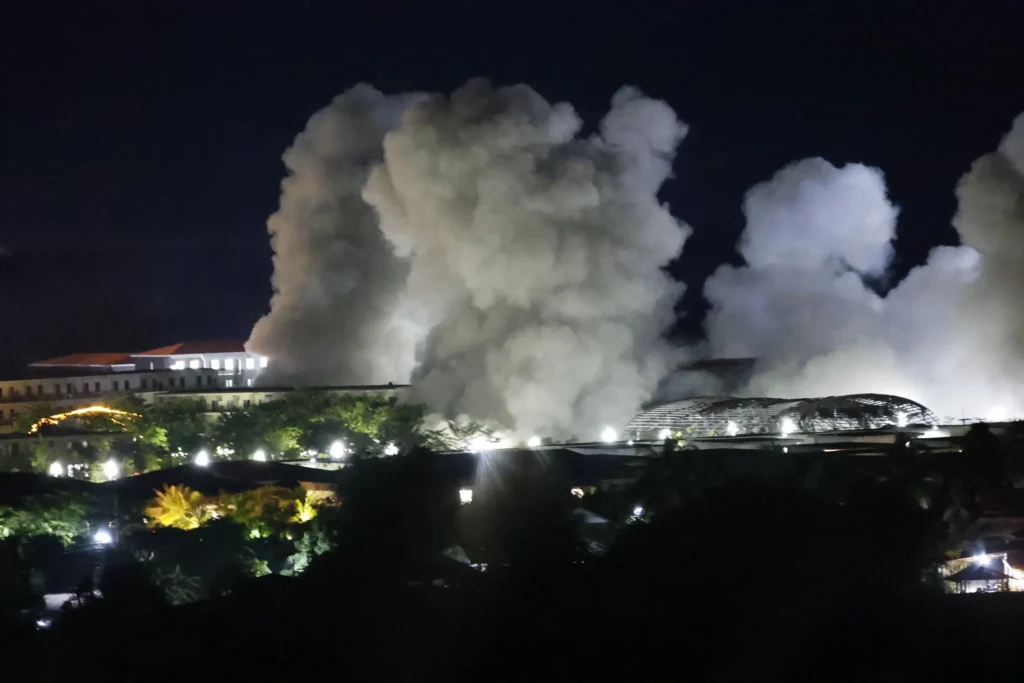
In October, the Junta claimed to have captured the KK Park, a scam center in Myanmar on the border with Thailand. They said that 2,000 workers were released. The strategy also included the demolition of more than 500 buildings of the complex and the destruction of hundreds of computers, all of which was streamed on state media.
The weird part? The military has historically been associated with scam business. It is believed that the shut down of KK Park was more of a message to China, who has been pressuring Myanmar to end this type of illegal business.
This initiative, however, is performative. According to a BBC well-placed source, KK Park is still functioning and the workers were just moved to other compounds to continue their work. Besides, there are dozens of other scam centers along the borders and most of them are precisely controlled by Karen militia groups allied to the Junta and backed by Chinese criminal gangs. All of them are still operating, based on human trafficking, forced labour and online frauds.
The Junta has been expanding control over Myawaddy, an important commercial link with Thailand and where the compounds are located. It blamed the Karen National Union (KNU) for illegally occupying the area and letting this type of business function. The military keeps trying to expand its territorial control to maximize the elections in December. The support of the allied militias has been essential for the Junta to fight back other armed groups, such as the KNU.
Days after the capture of KK Park, 700 foreigners left Myanmar and entered Thailand. These people come from different parts of the world, but mainly Africa and Asia, and are now going through legal procedures.
In November, the military invaded Shwe Kokko, another of the major scam compound on the border, and arrested around 350 people. They said Yatai, the company of the Chinese-Cambodian She Zhijiang, was behind the center.
What are scam centers?
Scam centers are compounds in which thousands of trafficked people are forced to work with online fraud, in the shape of romance scams and “pig butchering”, for example. In 2023, the United Nations counted approximately 120,000 people in Myanmar and 100,000 in Cambodia that were forcibly working in these centers. According to the UN, billions of dollars are earned from human trafficking to scam compounds.
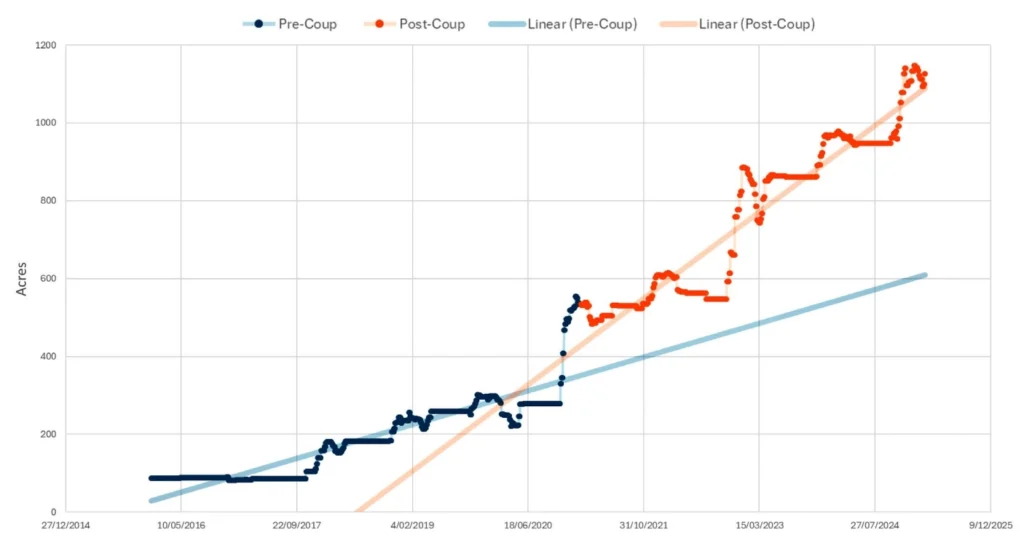
These places are connected to a way bigger network of transnational crime involving billions of dollars. This type of business has been gaining space in South-East Asia, especially in lawless border areas. Myanmar, Cambodia and Laos – part of the Golden Triangle – are the main countries in which the industry is proliferating. Since the coup in 2021, the Myanmar-Thai border has been one of the most concerning regions in this aspect as the number of operating centers doubled. Myanmar is currently one of the countries that mostly shelters organized crime.
The growth of developed and built-up areas within scam compounds along the border
People from all over the world are usually fooled by a job opportunity and fly to these countries, where they are forced to perform illegal work. Victims’ reports show that, inside the compounds, they were trapped and exposed to torture in the form of beatings and electric shocks.
Major compounds
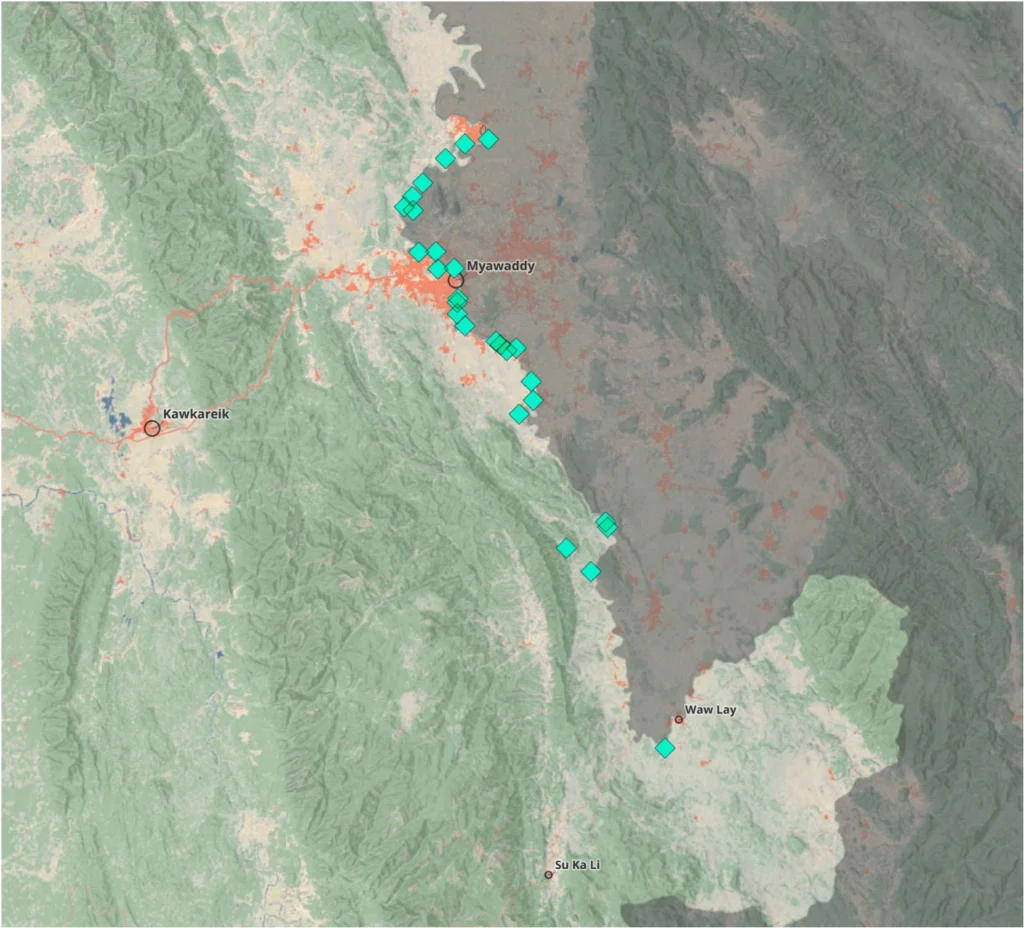
The Australian Strategic Policy Institute (Aspi) identified 27 scam centers around Myawaddy, a township in the Kayin region located, as mentioned before, on the border between Myanmar and Thailand.
The specific location of the 27 identified scam compounds in Myawaddy
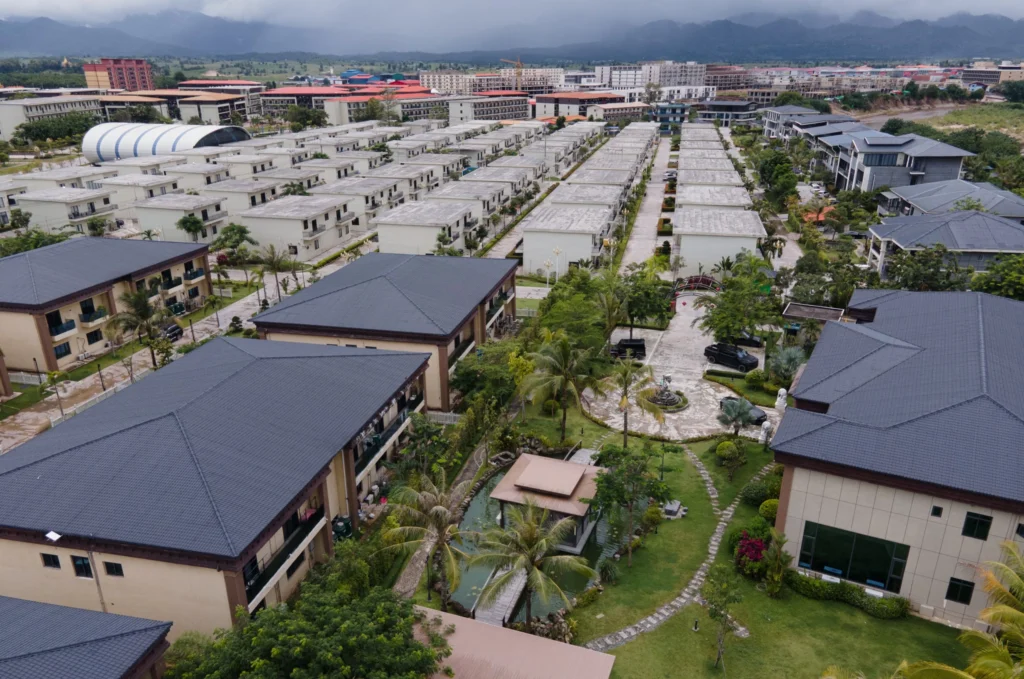
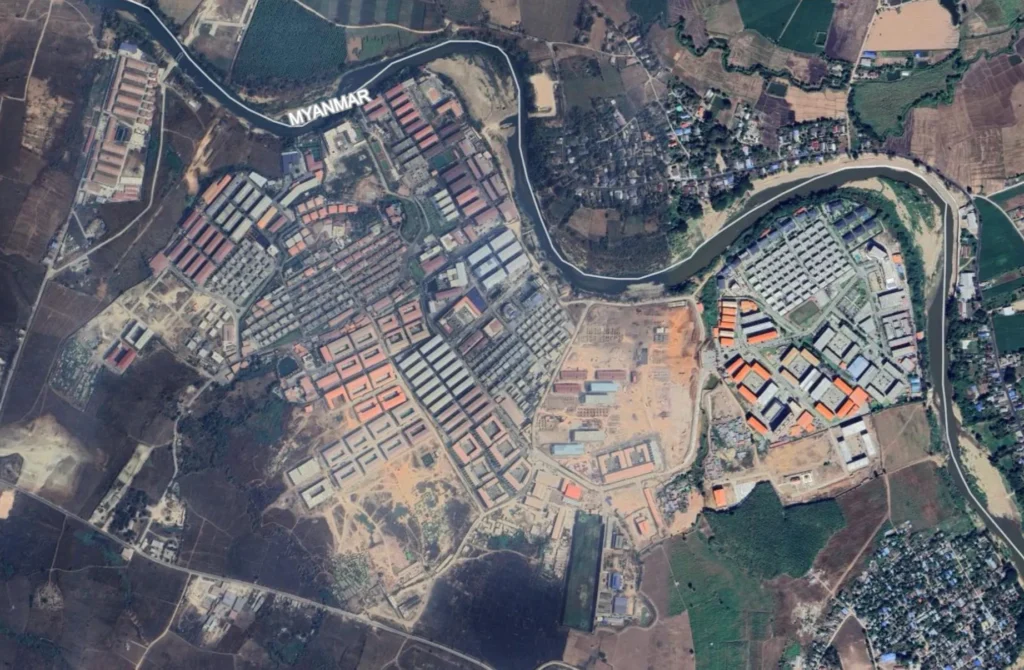
In early 2020, the Karen National Union (KNU) and Huanya International, a Hong Kong company, agreed to build an industrial park. That is how the KK Park was born and then became one of the major scam centers. Nowadays, it has one of the largest facilities and it has been growing over the years, with its own hospital, restaurants, and villas – all in 520 acres.
The KK Park (17/01/2021)
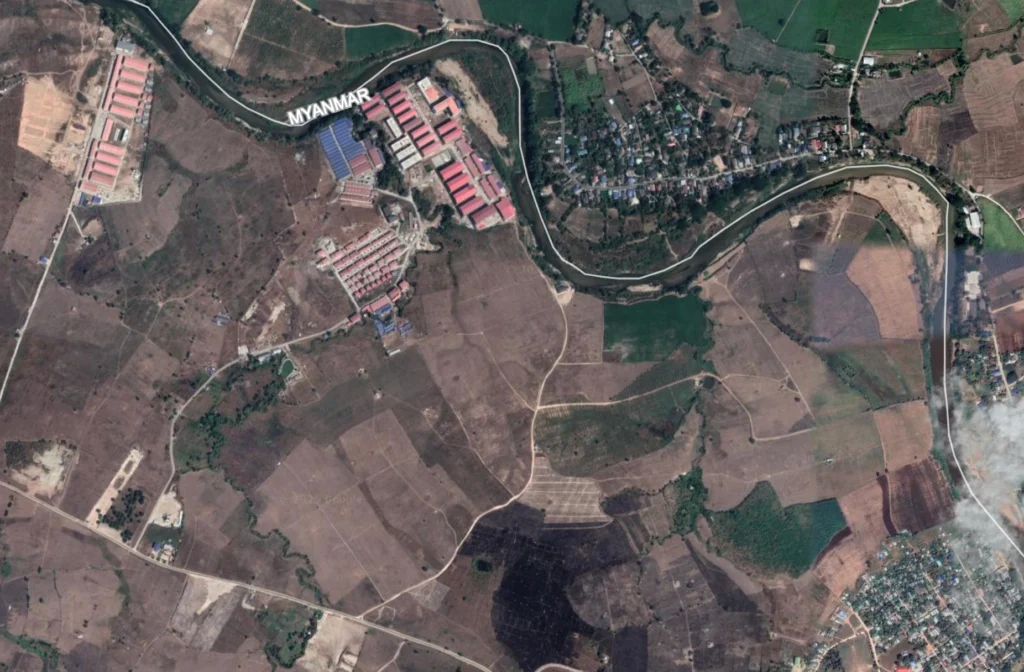
The KK Park (17/01/2021)
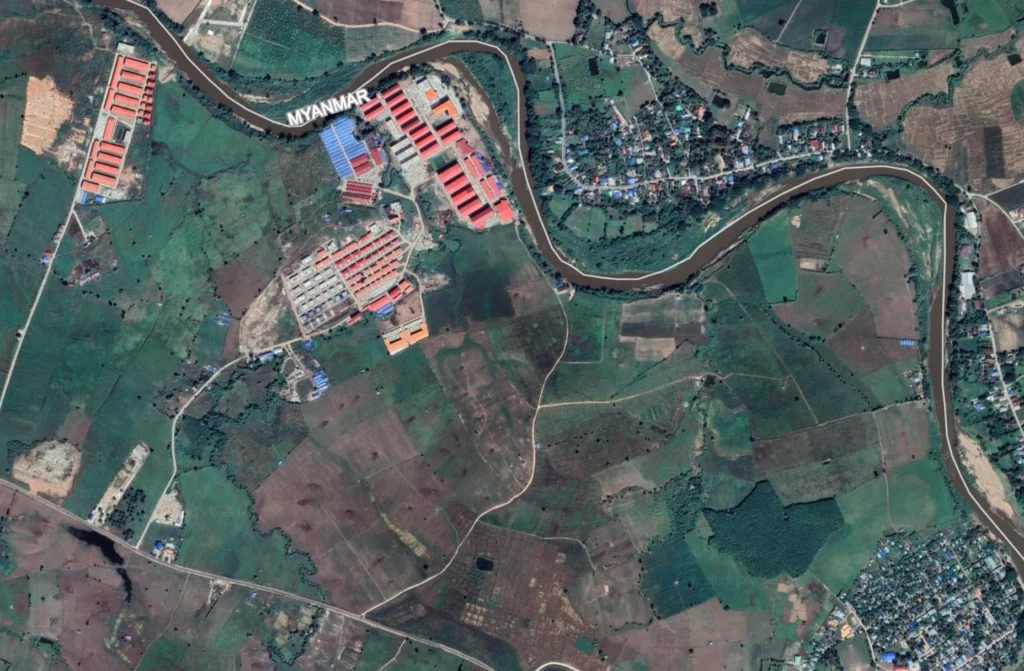
The KK Park (23/04/2023)
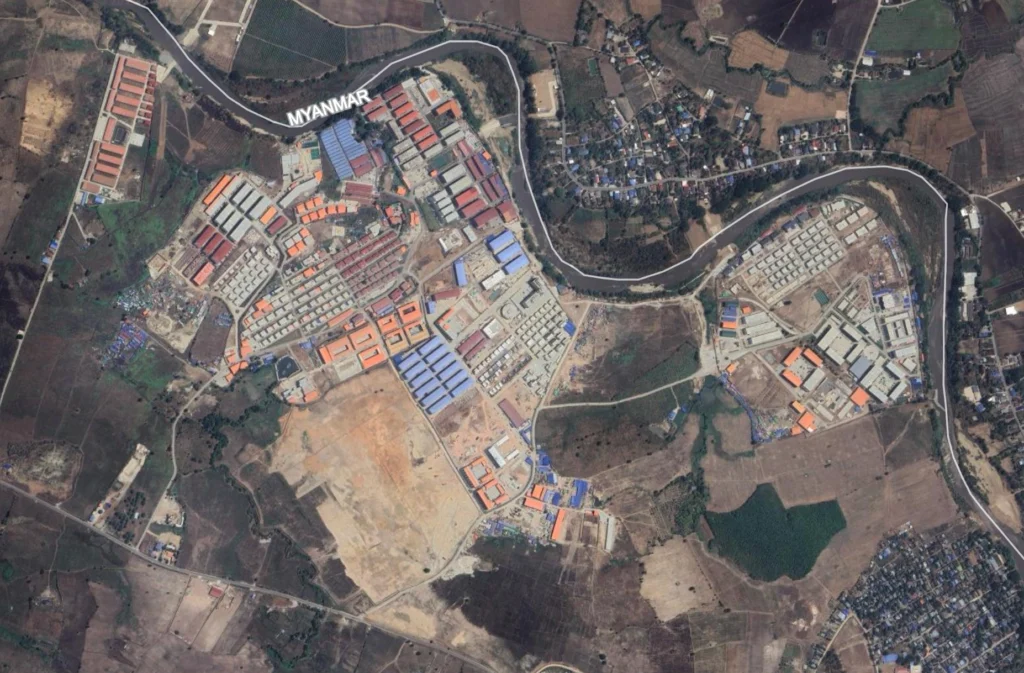
The KK Park (20/02/2024)
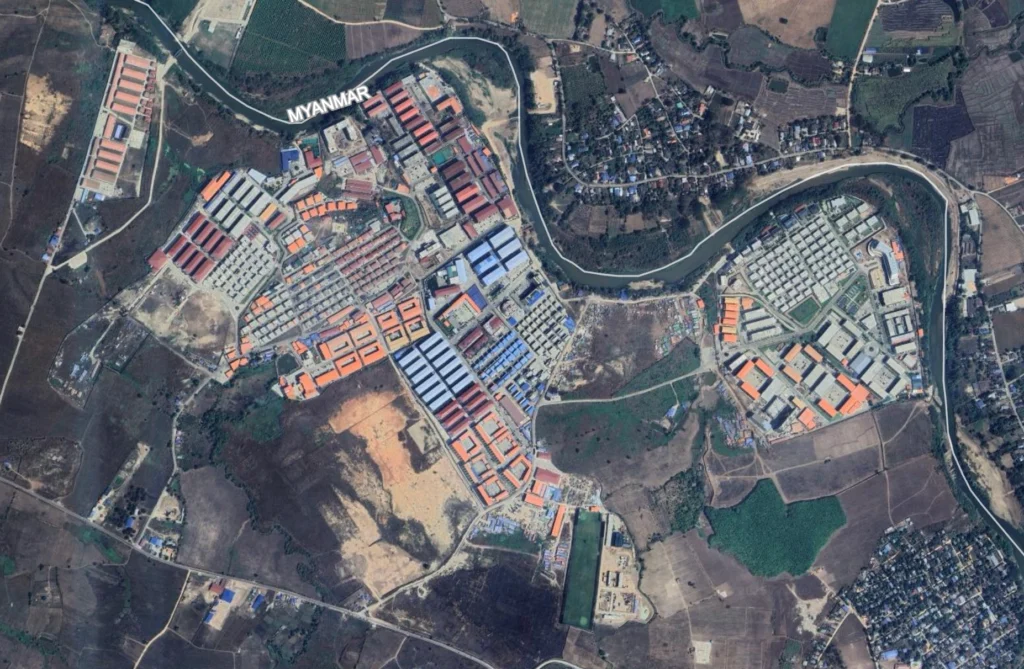
The KK Park (18/02/2025)
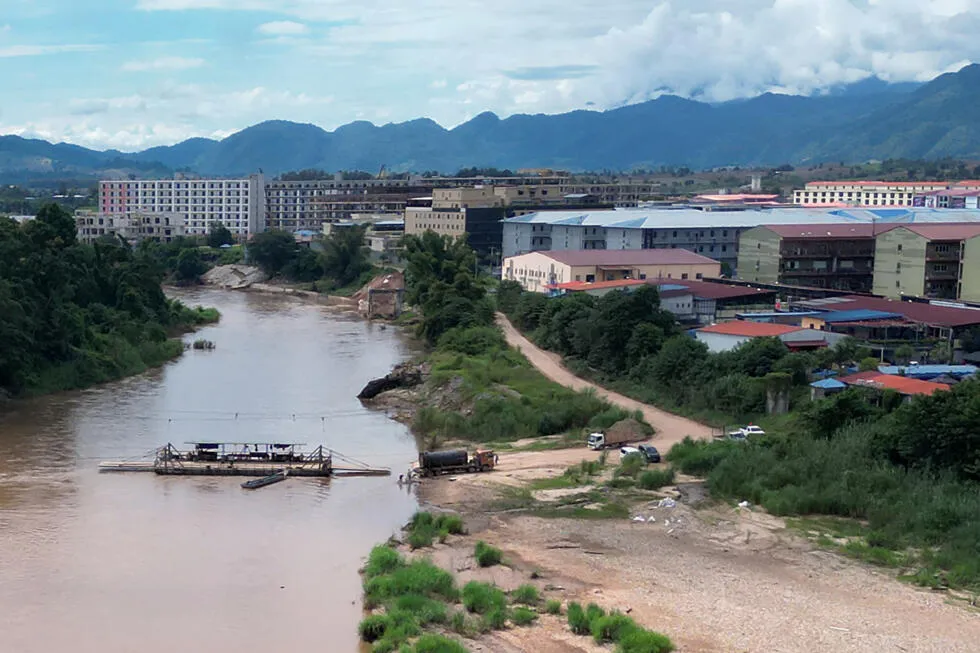
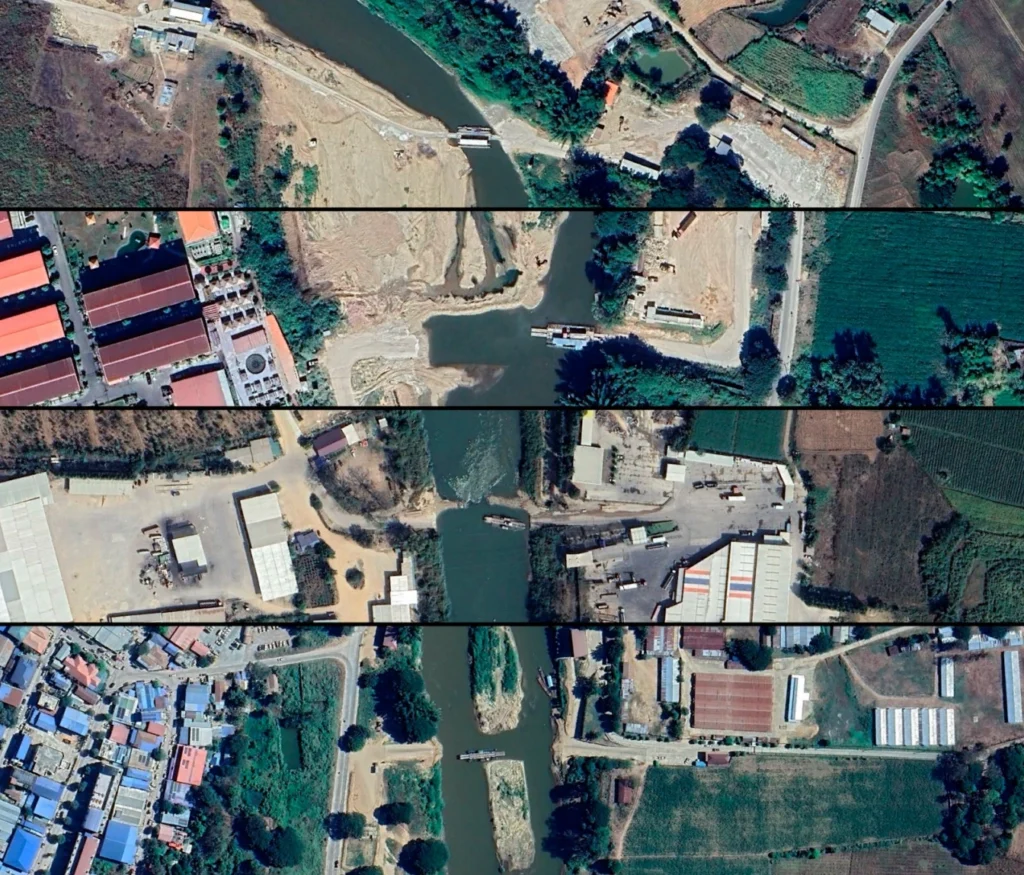
At another center, Tai Chang, even a floating dock was built to allow easier importation of supplies. From satellite images it is possible to observe fortifications and security systems around Dongmei Park, another huge compound, such as a military checkpoint and perimeter watchovers. According to the Aspi, four of these major compounds, the Dongmei Park, KK Park, Freedom Water Park and Shwe Kokko, have even opened unofficial ferry and barge crossings to facilitate illegal trade.
Ferry and barge crossings near Dongmei Park, KK Park, Freedom Water Park and Shwe Koko
Human trafficking and working conditions
This year, the Thai police said that around 100,000 people were being held in scam centers in Myanmar near their border. Victims tell that they had their passports taken away and were punished — physically or with discounts on their salary — in case they didn’t meet goals. They sometimes had detailed scripts on how to fool the targets and proceed with the operations. One of the most common strategies was to build a romantic bond with them. A copy of a “work contract” obtained by the AFP also indicated that the workers couldn’t leave their posts and managers were allowed to “educate” them in case rules were unfollowed.
David Scott Mathieson, ex-monitor of Human Rights Watch, said that the people working in these compounds go from “disposable” slave-like workers to skilled programmers that receive high salaries. The process is segmented: some people are responsible for targeting and getting the target’s contact details; while others constitute “the chatting team”, for example. Victims also claimed to have seen armed BGF (Border Guard Forces or Karen National Army) in the compounds, which aligns with the satellite images showing the militarization of these centers.
Rescue market
A Chinese woman told AFP that her brother disappeared in Yunnan, border region with Myanmar. His last phone record indicated that he was in the Wa region – which could possibly indicate a link between the scam centers and the United Wa State Army, known as the most powerful armed group in Myanmar. He had gone there for a job around smuggling products into China, but now she believes that he was indeed trafficked.
Through groups on WeChat, she found multiple people in the same situation: looking for relatives that had disappeared at the border. Since then, “private rescuers” started to get in touch with her saying that they were capable of taking people trapped in the centers. However, these rescuers can be scammers themselves or charge insane amounts of money for a rescue that might not even happen. This makes the role of anti-trafficking NGOs even harder, said Ling Li, a modern slavery researcher.
Starlink devices
Elon Musk’s company is currently one of Myanmar’s biggest internet providers, with almost 3,000,000 users. In KK Park, around 80 Starlink dishes could be seen through AFP images. What is weird is that Starlink service is not available in Myanmar.
Thai authorities had previously identified Starlink as the scam centers’ tool to maintain online activity even when the governments cut the electrical and internet supply of these locations. They notified the company, in addition to having intercepted devices they believed were gonna cross the border for this purpose.
In July 2024, California prosecutors warned the company about the situation. The US Congress Joint Economy Committee began an investigation on the involvement of Starlink with the centers.
In October 2025, after the takeover of KK Park, 30 Starlink devices were confiscated. Elon Musk said it cut satellite communication links with devices used by scam centers in Myanmar. There were more than 2,500.
Who to blame?
As it is clear, the hole situation if very foggy. To a certain extent, is almost impossible to leave any of the actors out of the equation when it comes to keeping the system working. What is it true is that, even though the KNU was involved in the foundation of KK Park, the BGF has a much more significant presence in these compounds and, therefore, we can assume that is more deeply involved. Added to that, the Junta clearly benefits from the whole market, as it action to “end” the scam centers was clearly performative and had no real intention.
The military has struggled to control important shares of national territory since 2021. So one of its priorities is precisely maintaining good relationships with allied militias and the continuation of their businesses — so the Junta can also profit from them. This includes the BGF, that controls Shwe Kokko, with highlight to Saw Chit Thu, responsible for the Border Guard Forces and thought to be one of the main people behind the scam business .
China plays an interesting role in this case. According to experts, Chinese-led crimes syndicates cooperate with the BGF in order to run most of these centers. But, in 2023, it pressured the neighbouring government to quit the scam centers business as it was affecting Chinese citizens through fraud and human trafficking.
In February, 7,000 people were released from one single center after China, Thailand and Myanmar pressured involved militias to end these types of compounds and worked together to release citizens of these same countries. The armed groups involved in the operation were the BGF and ****the Democratic Karen Buddhist Army (DKBA).
In September, the US – which set up a Scam Center Strike Force – and the UK imposed sanctions on people and companies somehow involved with Shwe Kokko and She Zhijang, Chinese-Cambodian head of the center. Huyana International, the company that financed the construction of the KK Park, is also believed to be associated with Wan Kuok Koi, who has invested in other scam centers in the region.
She Zhijang is now in China to face the accusations related to his participation in online scams.
Will there ever be an end?
A former worker at Shwe Kokko said his supervisor told workers to leave the compound as “there might be raids coming”.
A worker at KK Park said “Our company has already rented a new building near Myawaddy, (…) and they’ve resumed operations,”; “Since everyone in our company is in the same Telegram group, all workers who want to continue working went to that new place”.
No, they won’t stop – not soon at least. It’s impossible to imagine the end of a billion-dollar market financed by one of the richest and most powerful mafias nowadays: the Chinese mafia. Furthermore, scam centers are an integral part of Myanmar’s economy and a source of profit not only for the Junta but also for allied armed groups that control significant parts of the country. It’s also uncertain who and to what extent different actors benefit from these businesses, which makes fighting the problem even more difficult – and unlikeable.