
– M.S.
Context
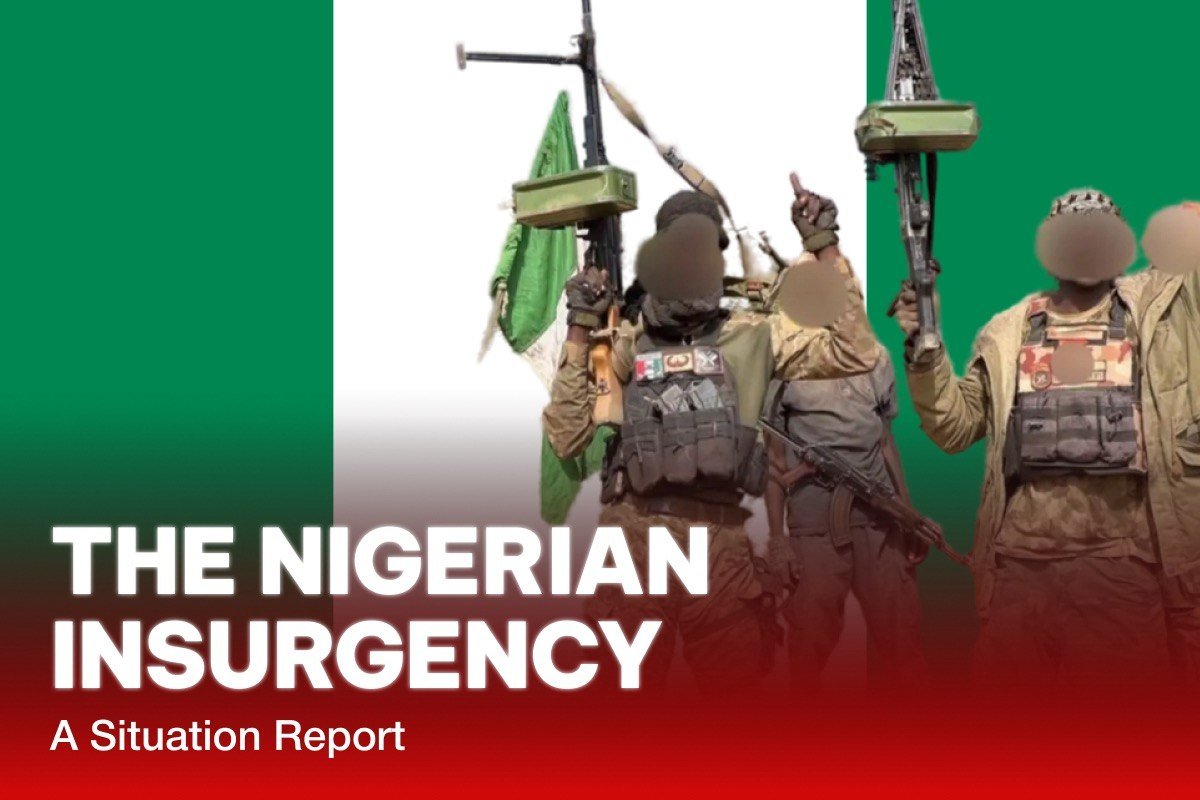
Recent U.S. Christmas Day airstrikes targeting Islamic State (ISIS) positions in northwest Nigeria have renewed international attention on Nigeria’s long-running jihadist insurgencies. Although the strikes were directed at ISIS-linked militants in the northwest, many of the most intense militant activities in the country over the past decade have occurred in the northeastern states, where Boko Haram and its offshoot, the Islamic State West Africa Province (ISWAP), are based and known for high-profile attacks including the 2014 kidnapping of more than 270 schoolgirls from Chibok. In the months leading up to the airstrikes, U.S. President Donald Trump publicly framed elements of the violence as persecution of Christians and suggested that the U.S. might take military action in response, a characterization Nigeria’s government has rejected as oversimplifying a complex conflict affecting people of many faiths.
Origins of the conflict
The exact origins of Boko Haram are disputed. Some accounts trace the group to 2002, when Mohammed Yusuf, a popular Islamic preacher, emerged as its leader in Maiduguri, the capital of Nigeria’s Borno State and where most of the group’s activities would be centered around. Boko Haram’s ideology is based on an extreme interpretation of Islam that rejects Western education, political systems, and social institutions. Its stated goal is to replace Nigeria’s secular government with a state governed by strict Islamic law.
Despite initially focusing its activities in northeastern Nigeria, its ambitions became more visible on the national and international stage in 2011, when it carried out a deadly attack on the United Nations headquarters in Abuja, Nigeria’s capital. The bombing marked a significant escalation in the group’s tactics and signaled its intent to target international institutions, drawing global attention to Nigeria’s growing security crisis.
In March 2015, Boko Haram leader Abubakar Shekau pledged allegiance to the Islamic State group, prompting the organisation to rebrand itself as the Islamic State West Africa Province (ISWAP). The pledge was accepted by Islamic State leadership the same month, marking the group’s formal alignment with the global jihadist network. The alliance, however, soon led to internal divisions, as Islamic State leaders appointed Abu Musab al-Barnawi as the head of ISWAP, a move that Shekau rejected. The dispute triggered a split within the organisation, leaving two rival factions: ISWAP, led by al-Barnawi, and a separate Boko Haram faction that remained loyal to Shekau. Since the split, ISWAP has emerged as the larger and more organized faction.
Nigerian authorities have repeatedly claimed major successes against Boko Haram, with the military at various points declaring the group “technically defeated.” Officials have cited territorial losses, the killing of senior commanders, and the surrender of fighters as evidence that the insurgency has been largely contained. However, continued attacks suggest the group retains the capacity to carry out large-scale violence. On 15 May 2025, Boko Haram fighters killed nearly 100 people in the villages of Mallam Karamti and Kwatandashi in Borno State, according to the Nigerian newspaper, Daily Trust. The attack was reportedly carried out against residents accused of being loyal to, or acting as informants for, the rival Islamic State West Africa Province faction, underscoring both the persistence of the insurgency and the growing violence between jihadist groups themselves.
It’s victims
The human cost is staggering. Renewed violence in Nigeria has displaced around 3.5 million people in recent months, with approximately 80 percent of those displaced located in the north, according to the World Food Programme (WFP). Boko Haram and ISWAP, have systematically weaponized food insecurity as a tool of control and survival. Research by Papale and Castelli (2025) documents how these armed groups have deliberately manipulated access to food by destroying crops, banning farming and fishing, looting livestock, and using taxation and coercion to dominate rural communities. In many areas of Borno State, farmers are forced to pay taxes to armed groups such as ISWAP, sometimes around ₦10,000 (£5) per hectare, while navigating persistent threats of abduction or attack, according to a BBC report. These practices have devastated livelihoods and accelerated displacement, deepening an already severe hunger crisis.
Militant attacks in northeastern Nigeria have left millions of civilians at risk, yet the impact of violence is often misrepresented in public discourse. While some international commentary has framed the insurgency as a “Christian genocide,” this characterization is misleading. Most victims of Boko Haram and ISWAP are Muslim, according to data from ACLED, a research group tracking political violence worldwide. Targeting is often motivated by geography, perceived allegiance to rival factions or the security forces, or refusal to comply with armed groups’ demands. Incidents such as the May 2025 killings in Mallam Karamti and Kwatandashi villages, reportedly carried out against residents accused of supporting ISWAP, underscore how violence is often instrumental rather than sectarian. Boko Haram has also targeted Muslim clerics, communities, and mosques that resist its authority, highlighting that the insurgency’s harm extends across religious lines.
The U.S. Institute of Peace, through the CLEEN Foundation in Nigeria, found that recruitment into Boko Haram is heavily shaped by socioeconomic vulnerability. Poverty, unemployment, illiteracy, and weak family structures make young men susceptible to indoctrination by itinerant preachers and extremist messaging These structural factors intersect with the humanitarian crisis: as communities face hunger, displacement, and insecurity, recruitment pressures and coercion intensify.
Against this backdrop, the U.N. World Food Programme (WFP) warned that more than one million people in northeastern Nigeria could lose access to emergency food and nutrition assistance within weeks unless new funding is secured. The agency said it will scale back aid to just 72,000 people in February, down from 1.3 million assisted during last year’s lean season. The cuts come amid a wider contraction in humanitarian funding, including reductions to U.S. Agency for International Development (USAID) support. WFP warned that up to 35 million Nigerians could face severe hunger in 2025, the highest figure recorded since the agency began monitoring food insecurity.
Conclusion
Nigeria’s counterinsurgency highlights a critical tension between short-term security gains and long-term civilian vulnerability. U.S. and international military support can degrade jihadist groups and temporarily reduce their territorial control, but reductions in humanitarian aid, particularly food and nutrition assistance, leave underlying conditions such as poverty, displacement, and insecurity unaddressed. This imbalance highlights a structural limitation in many counterterrorism strategies, where security is primarily conceptualized as a military objective rather than as a broader social condition. Reductions in humanitarian assistance do not only generate immediate humanitarian needs; they also alter the conflict environment by increasing economic vulnerability, weakening confidence in state institutions, and reducing access to non-violent means of survival. As livelihoods vanish, civilian dependence on armed groups for survival increases, expanding recruitment leverage and informal taxation systems.
The victims of Nigeria’s insurgency are thus primarily civilians navigating poverty, displacement, and fear, rather than adherents of a single religion. Oversimplified narratives of a “Christian genocide” misrepresent the experiences of most affected communities, who are predominantly Muslim, and obscure the broader structural vulnerabilities driving violence. Understanding who is affected, and why, is essential for responses that address both immediate survival needs and the longer-term conditions that insurgent groups exploit.