
– Gabriela Mazzante
What is happening?
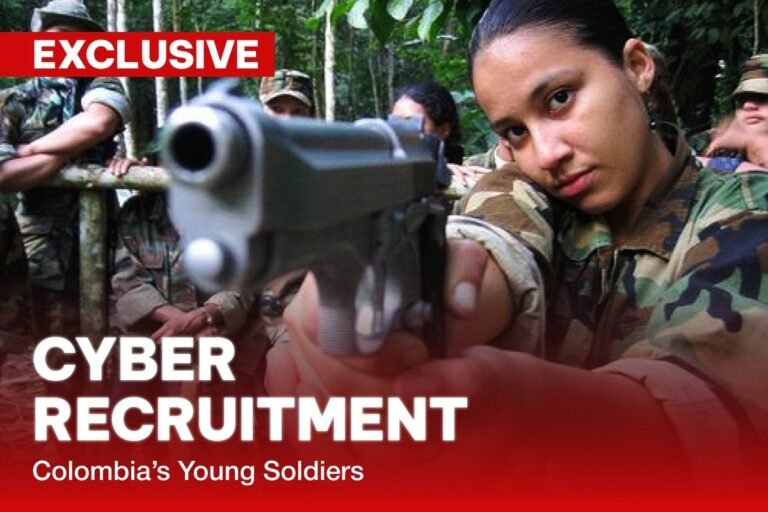
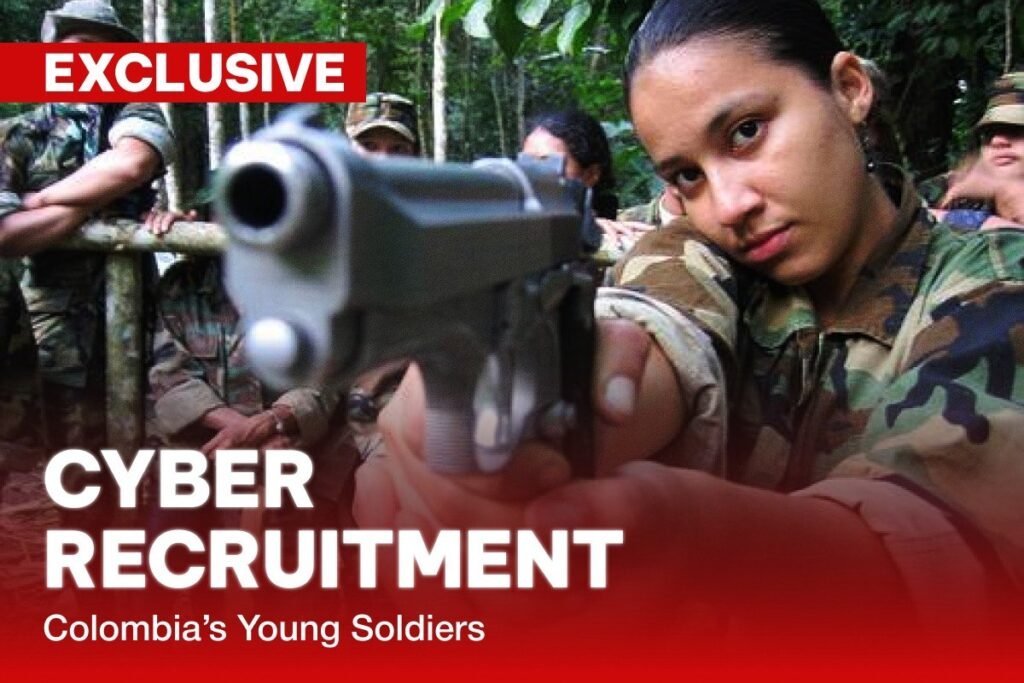
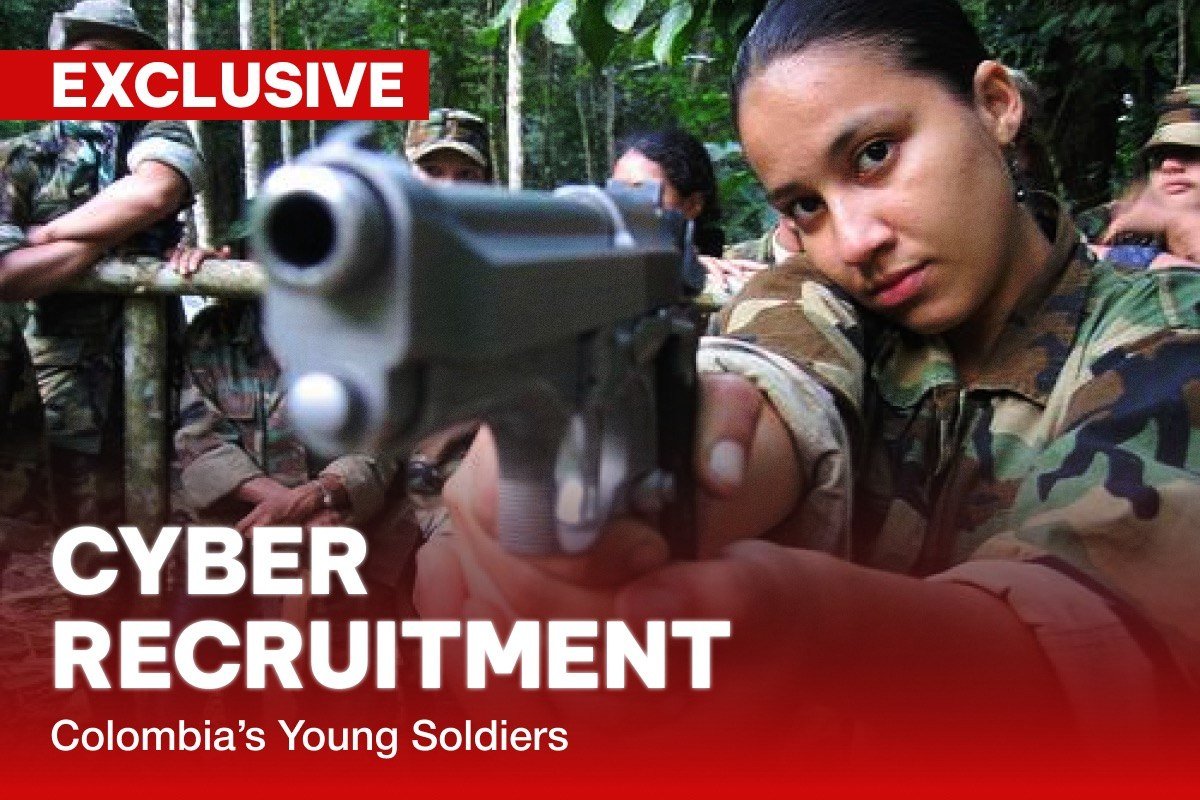
In Colombia, children are being drawn into the country’s armed conflict under the guise of choice. Some join the guerrillas “voluntarily,” enticed by promises of wealth or belonging, while others are coerced outright. A guerrilla is an irregular armed group, such as ELN and FARC dissidents, that uses unconventional, often small-scale and mobile military tactics to challenge state authority or pursue political, ideological, or territorial objectives. Legally, there can be no ambiguity: Article 98 of the Colombian Constitution states that citizenship begins at 18, meaning no one under that age can make a valid decision to enter a guerrilla force. With or without direct force, all child recruitment is forced under child rights and international humanitarian law.
New strategy: Social media
What has changed in recent years is not only the persistence of the practice, but the methods. Guerrilla recruitment has entered the digital age. X is used to spread their ideology, statements and it is the most direct access to updated information for media outlets. WhatsApp and Facebook are used directly to talk to civilians in specific regions under guerrilla control. TikTok, with its lighter moderation, has become the stage for recruitment videos promising a luxurious lifestyle. Clips circulate showing teenage influencers in uniform, posing in front of sprawling coca fields, set to the soundtrack of Mexican ballads. Symbols abound: the green leaf emoji, referencing coca crops; Colombian flags and multicolored hearts; or the ninja face, a digital shorthand for clandestinity. Boys are targeted with images of motorbikes, cash, and weapons, while girls are offered promises of romance, empowerment, education, and even cosmetic surgery. This imagery fuses the narco aesthetics of Pablo Escobar’s era with a rebellious veneer, suggesting that joining the guerrilla is a path to social ascension in one of Latin America’s most unequal societies. “What begins as an illusion of power and recognition ends as an experience marked by fear, abuse, and the loss of childhood,” said a teacher in Cauca, who requested anonymity for fear of reprisals.
Why is this happening?
Colombia’s armed conflict, now spanning more than six decades, has its roots in deep social inequality and land concentration. In the mid-20th century, vast sectors of the rural population were excluded from land ownership and political participation. This inequality gave rise to peasant self-defense groups demanding agrarian reform and social justice, which later evolved into guerrilla movements like the FARC (Revolutionary Armed Forces of Colombia) and the ELN (National Liberation Army). The 2016 peace accord dissolved the FARC as an organization, demobilizing more than 13,000 fighters. Yet the promises of rural development and reintegration have advanced slowly, and dissident factions such as the Estado Mayor Central (EMC) rejected the agreement. Along with the ELN, they continue to fight for control of territories rich in coca crops, mining routes, and strategic corridors, especially in regions like Cauca and Catatumbo.
The consequences of that reality are devastating. The Association of Indigenous Councils of Northern Cauca (ACIN) has documented how the Nasa people are among the most affected. Once recruited, children face sexual, physical, and psychological abuse. A recent study by Crisis Group found that minors are often given only the most basic training before being pushed into battle, used as cannon fodder to protect higher-ranking combatants. This year alone, 125 young people have been recruited, including girls as young as fourteen, drawn into combat roles or coerced into sexual exploitation. Cauca, a department in Colombia’s southwest, remains the epicenter of this crisis, with Indigenous communities carrying the heaviest burden. Recruitment is not new: the Truth Commission estimates that between 1990 and 2017, between 27,101 and 40,828 children and adolescents were forced into armed groups. The practice persists, In 2024, at least 533 children were recruited across the country, most of them Indigenous, primarily at the hands of the EMC, the largest faction of FARC dissidents.
Why does this matter?
Behind the propaganda lie deeper social fractures. According to the National Statistics Department, 46 percent of the rural population lived in poverty as recently as 2022. In these territories, the state often fails to guarantee basic rights such as healthcare, education, or protection. Into this vacuum step armed groups, offering food, money, and the appearance of family, even if illegitimate. For many adolescents facing extreme poverty, the guerrillas appear as the only available option. The silence surrounding the problem only worsens it. Marta (under anonymous name), a mother in Cauca, told investigators she dared not report her son’s abduction because when armed men took him, they warned that if she went to the police, they would execute the boy and then come for the rest of the family. With her, are thousands of mothers who do not have access to credible and effective sources of security from the state. The recruitment of children in Colombia endures because of poverty, inequality, and the absence of the state. It adapts to each era, moving now from jungle clearings to digital platforms, but always preying on the most vulnerable. While negotiations in Bogotá falter, the real battle is being fought in Cauca’s schools, controlled regions, Indigenous communities, and on the smartphones of its youth. Each child lost to the guerrillas is a reminder that peace for the communities requires more than signatures on an accord.